For many women, the way birth is described becomes the framework through which they understand it. Birth is often presented as something to fear, endure, or survive. First-time mothers are especially vulnerable to absorbing the message that labor must be painful, overwhelming, and beyond their ability to handle.
Abby Neese’s story offers a different perspective.
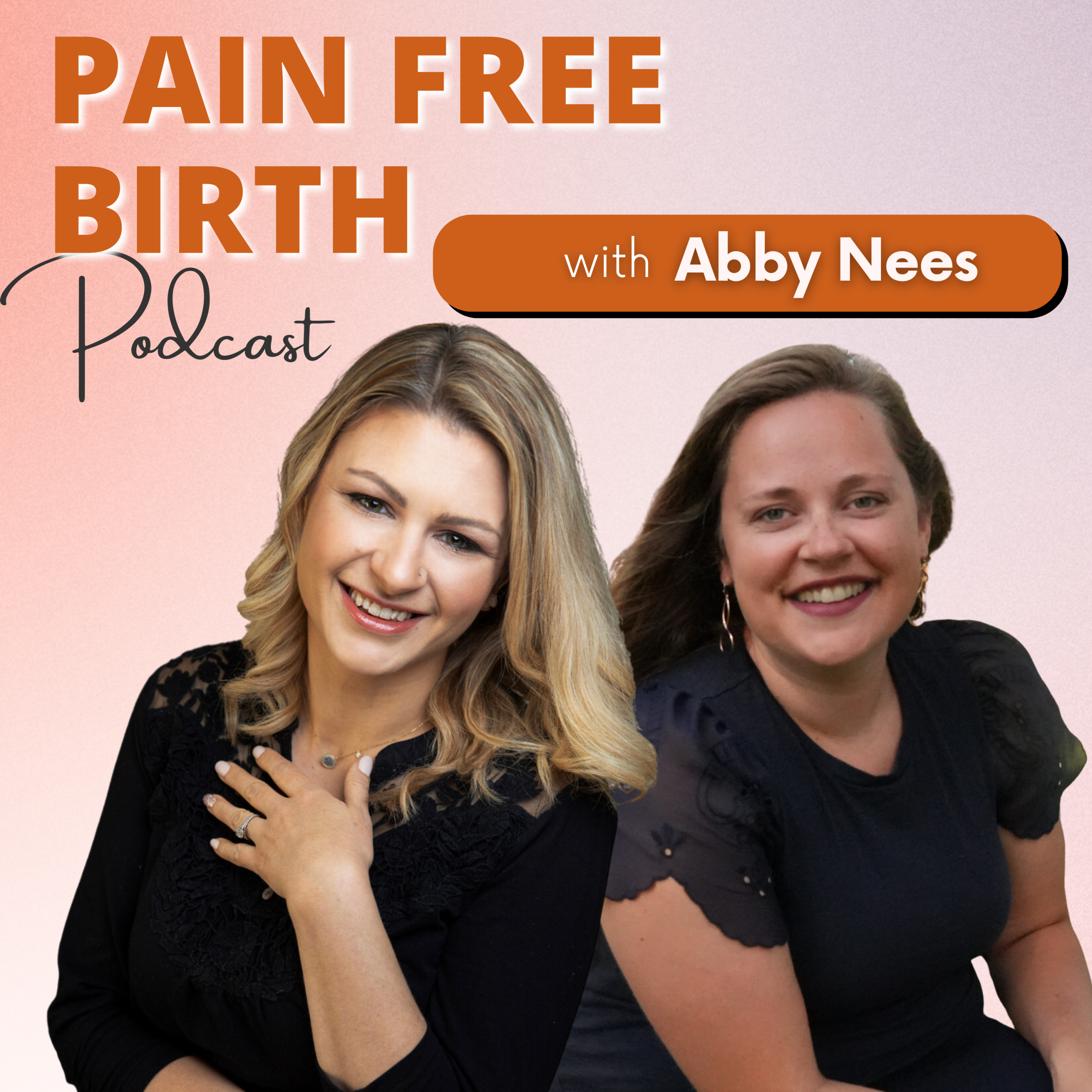
In this episode of the Pain Free Birth Podcast, Abby shares how she experienced two pain-free home births, caught her own first baby in the birth tub, experienced the fetal ejection reflex during her second birth, and eventually became a doula after feeling called to support other women.
Her labors were very different. One unfolded so quickly that the midwives did not arrive in time. The other required deep emotional focus, intentional breathing, and a willingness to let her body push without interference. Yet Abby describes both as peaceful, empowering, and pain-free.
Her testimony is a reminder that education, faith, intuition, emotional safety, and trust in the body can reshape the way labor is experienced.
A First-Time Mother With a Strong Intuition
During Abby’s first pregnancy, she had a clear sense of how her birth would unfold. She believed her baby would arrive on his due date, labor would move quickly, and her midwives would not make it in time.
There was no test confirming these impressions. Abby could not explain exactly where they came from. They simply felt like deep maternal intuition.
She shared these thoughts with her midwives during her final prenatal appointments. She was not sure whether they believed her, but she continued to sense that her labor would not follow a long or predictable pattern.
All three instincts proved true. Her baby arrived on his due date, labor progressed quickly, and the midwives reached the home shortly after he was born.
For Abby, this became an early lesson in trusting herself. First-time mothers are sometimes treated as though they cannot understand their bodies because they have never given birth. While experience can bring wisdom, it does not mean intuition is absent during a first pregnancy.
A mother notices movement patterns, emotional changes, shifts in energy, and physical sensations no one else can experience on her behalf. Abby’s intuition did not cause her to reject support. It prepared her to remain calm if the midwives were not present.
When that moment came, she was ready to trust the process.
Discovering Pain Free Birth Before Pregnancy
Abby first discovered Pain Free Birth before she and her husband were married. They were engaged when the Pain Free Birth Instagram account appeared in her feed, and she immediately felt excited by the possibility that labor did not have to look the way it was usually portrayed.
Although she wanted to purchase the course immediately, the planner in her decided to wait until she was married and pregnant. Still, the message had already taken root. Birth could be approached with peace rather than fear.
Abby had always wanted a water birth, but she was not originally committed to giving birth at home. One of the first things she did was review the policies at her local hospital.
At the time, women could labor in water but could not give birth in water. That distinction concerned Abby. She could not understand why a woman would be expected to leave the water at the moment she felt safest, most comfortable, and closest to birth.
Rather than accepting the policy, she began researching other options. That search eventually led her toward home birth.
Choosing Home Birth Despite Other People’s Fears
When Abby and her husband told their families they were planning a home birth, the reactions were mixed. Her family was not especially surprised because they knew she had wanted a water birth for years.
Her husband’s family responded more emotionally. He is a twin, and his mother’s birth experience had involved circumstances that made hospital care feel necessary. Although it had happened decades earlier, the fear connected to that experience influenced the way the family viewed Abby’s plan.
Their concerns came from their own history, not necessarily from Abby’s pregnancy or individual circumstances.
After that conversation, Abby and her husband decided to keep many of their birth plans private. They did not want to spend the pregnancy repeatedly defending their choices or absorbing other people’s anxiety.
This became an important part of Abby’s preparation. Protecting a birth environment begins before labor. It includes protecting the emotional environment of pregnancy.
Not every opinion must be received, and not every fearful story must be carried. Another person’s experience does not determine what will happen in someone else’s birth.
The Simple Physiology Lesson That Removed Fear
One concept from the Pain Free Birth course became foundational to both of Abby’s births.
A contraction is a muscle contraction.
The uterus is a powerful muscular organ. During labor, it contracts to help the cervix open and guide the baby downward. The sensation can be strong, but intensity does not automatically mean something is wrong.
Abby remembers learning this through the example of flexing a bicep. When someone flexes an arm muscle, the contraction itself is not automatically interpreted as dangerous. It is simply the muscle doing its job.
That comparison changed the way she viewed labor. Instead of seeing each contraction as something attacking her, she understood it as purposeful work. Her uterus was helping her baby move closer to birth.
Abby does not claim that every woman will have the same experience or that labor is always simple. A baby’s position, the mother’s nervous system, the environment, previous experiences, and unexpected complications can all affect how birth feels.
Still, understanding the basic physiology removed much of her fear. She was no longer afraid of the contraction itself.
Filling Her Mind With Positive Birth Education
Abby became an eager student of birth. She read books about physiological labor, childbirth without fear, breastfeeding, and positive birth experiences. She wanted information that acknowledged the body’s design rather than treating birth as an emergency waiting to happen.
She was especially drawn to resources that were not fear-based. Faith-centered encouragement was meaningful when it naturally aligned with the content, but her primary goal was to understand how birth worked.
This preparation mattered because Abby lived in rural Iowa, approximately halfway between Des Moines and Omaha, where maternity care options were limited. Information became one of her greatest resources.
Positive birth stories also expanded what she believed was possible. When women hear only traumatic or highly medicalized stories, the nervous system may begin preparing for danger before labor starts.
Positive stories do not guarantee an outcome or erase the possibility of complications. They simply offer a more complete picture. They remind women that birth can include calm, strength, instinct, surrender, and joy.
For Abby, education did not make her believe she could control every detail. It helped her trust that she would understand what her body was doing.
Cleaning the Floors and Going Into Labor
As her due date approached, Abby became unusually focused on cleaning her floors. For approximately two weeks, she kept thinking about how much she wanted them steamed and freshly cleaned.
On the Saturday before her Sunday due date, she spent much of the day working on them. She finished around 6:00 that evening.
Later that night, around 10:15 or 10:45, she experienced her first contraction.
Abby believes the movement, bending, and time spent on her hands and knees may have helped labor begin. Even after contractions started, however, she remained hesitant to believe she was truly in labor.
She had heard about Braxton Hicks contractions and prodromal labor. Because she had never given birth before, she did not want to become excited only to have the sensations stop.
She continued through the night and much of the next day without fully accepting that her baby was coming. At approximately 3:45 in the afternoon, she lost her mucus plug.
That physical sign changed everything. Abby finally allowed herself to believe labor was real.
Moving Through Early Labor at Home
Once labor began progressing, Abby’s contractions became stronger and closer together, approximately four to five minutes apart.
Her husband and mother were with her at home. Abby walked through the house carrying a pillow. When a contraction arrived, she leaned her head into it and swayed her hips.
The movement felt natural and helped her stay loose rather than bracing. She also sat on the toilet during many contractions, a position sometimes called “dilation station” because it can encourage the pelvic floor to release.
Meanwhile, her husband stayed in contact with the midwives, who had an approximately one hour and twenty minute drive. Because the contractions were not yet two to three minutes apart, there was hesitation about leaving immediately.
The situation could easily have created panic, especially for a first-time mother. Abby knew the midwives were far away, but she did not interpret the progression as an emergency.
She continued moving, breathing, and trusting her body.
Her Water Breaks and Labor Moves Quickly
At approximately 5:25 that evening, Abby was on her hands and knees in the living room when her water broke.
Her birth tub was ready, so she got into the water. The midwives began driving toward the home, but there was very little time left.
The room was quiet and dim. Although it was a bright July evening, Abby had closed the curtains and created a private atmosphere. Music played in the background.
The song “Lullabye” by Billy Joel had inspired the theme of her baby’s nursery, and Abby had sung it throughout pregnancy. When it began playing during labor, she had a sudden thought. She wanted to push her baby out while that song played.
Time seemed to disappear once she entered the water. She remained focused on what was happening in her body. She does not remember a painful transition or ring of fire. She felt her body bearing down and followed the urge.
Soon, her baby’s head emerged.
Catching Her Own Baby in the Birth Tub
At 6:20 that evening, less than one hour after her water broke, Abby gave birth to her son.
The midwives had not yet arrived. Her husband was speaking with one of them by phone, but Abby was the person who received the baby. Reclined in the birth tub, she brought him upward and placed him on her chest.
One of the first things she noticed was that he had hair. She also felt that he had good muscle tone. Although he did not cry immediately, she remained calm and attentive to how he looked and felt.
The emotion that surprised her most was sadness that labor had ended. She had loved the experience so much that part of her wanted to do it again the next day.
She did not feel that she had barely survived something unbearable. Labor had felt peaceful, purposeful, and deeply normal.
Abby did not interpret the moment as proof that she was unusually brave. It felt like she had followed what her body was created to do.
Holding her son also deepened her faith. Growing a baby, moving through labor, and bringing new life to her chest felt like a powerful reflection of God’s design.
The birth did not create fear of the future. It created longing.
What a Pain-Free Contraction Felt Like
When asked what the contractions felt like, Abby compared them to menstrual cramps. Because she does not normally experience period cramps, the sensations were noticeable, but she did not describe them as painful.
They were strong enough to require attention, movement, and focus, but she never interpreted them as suffering. She also does not remember experiencing the ring of fire.
Pain is so closely associated with childbirth that a pain-free account may be dismissed as exaggeration or faulty memory. Abby understands the skepticism, but she encourages women to remain open to possibility.
If labor can be painful, it must also be possible for it to be experienced differently. Not every woman will have a pain-free birth, and pain does not represent failure. Bodies, babies, circumstances, and nervous systems vary.
The goal is not to deny that pain exists. It is to stop declaring it inevitable for every woman.
Relaxing the Jaw and Releasing Tension
During her first labor, Abby focused on keeping her throat open and jaw loose. She frequently used horse lips, exhaling through relaxed lips and allowing them to flutter.
Looking back, she laughs at how often she did it. As a first-time mother, she believed she needed to use the technique during nearly every contraction to help the baby descend.
Although she may have been overly enthusiastic, it gave her a constructive focus. Relaxing her lips reminded her to soften her jaw, throat, and body instead of tightening against the sensations.
The jaw and pelvic floor often respond to tension together. Clenching the teeth, holding the breath, or tightening the shoulders can contribute to tension throughout the body.
Abby’s body already knew how to contract. Her role was not to control every movement but to avoid creating unnecessary resistance.
A Comfortable Recovery Despite Tearing
After birth, Abby learned she had first and second-degree tearing located higher internally rather than primarily along the perineum. The tears required sutures.
Despite the tearing and stitches, she experienced almost no physical discomfort. She had prepared a peri bottle, sitz bath supplies, and even a bidet, but did not need them for pain relief.
She had no significant swelling and did not feel the soreness she expected. Her recovery raised questions about how she had pushed.
Abby did not hold her breath, pull her legs back, and force prolonged pushes. She felt natural bearing down and allowed her body to move the baby.
Physiological pushing can look different from coached pushing. A woman may breathe, grunt, vocalize, change positions, and follow involuntary urges rather than forcing the baby downward.
This approach does not guarantee that tearing will never occur. Abby’s internal tears show that tissue injury can happen even during a gentle birth. Still, her lack of swelling and pain was significant and reinforced her trust in allowing the body to lead.
Postpartum Anxiety After a Peaceful Birth
Although Abby’s labor and physical recovery were positive, the postpartum period brought an unexpected emotional challenge. Eleven days after birth, she developed a temperature of 101.4 degrees.
During pregnancy, she had read about postpartum infections and maternal mortality. When she saw the fever, her thoughts quickly spiraled toward the worst possible outcome.
She became convinced she might die and leave her husband and baby behind. Her husband took her to urgent care, and they were eventually sent to the emergency room.
The cause was a minor bladder infection.
Looking back, Abby can see how postpartum hormones and anxiety intensified the situation in her mind. Her story is a reminder that a peaceful birth does not prevent postpartum anxiety.
It also shows that trusting the body and seeking medical care are not opposites. Abby noticed a symptom, took it seriously, and received an evaluation. Women deserve to have postpartum concerns taken seriously and to receive emotional support when fear becomes overwhelming.
Preparing Differently for a Second Home Birth
Abby became pregnant again approximately nine months after her son was born. The due dates of her first and second babies were exactly eighteen months apart.
Although thrilled, she felt nervous about whether another birth could be as peaceful as the first. She also had a child depending on her, which made the possibility of something happening feel heavier.
During the pregnancy, Abby worried that the baby might be stillborn because the baby felt calmer in the womb than her son had. She prayed about the fear and asked others to pray with her rather than pretending the anxiety was not present.
The baby was healthy.
Abby also chose a different midwife. Her first team consisted of certified nurse midwives. This time, she chose a certified professional midwife whose approach felt more naturally minded and aligned with Abby’s values.
She wanted a provider who viewed pregnancy and birth as normal unless evidence indicated otherwise. The new midwife’s calm presence made Abby feel heard and respected.
Emotional Intensity Without Physical Pain
Abby’s second labor began on New Year’s Eve, two days before her due date. She woke around 6:00 in the morning with a strong feeling that she needed her midwife nearby.
She had experienced a few contractions, but they were not yet consistent. Still, she texted the midwife and asked her to come.
When Abby’s toddler woke around 7:00, she realized she needed him out of the house. Hearing his voice made it difficult for her to turn inward and release. Her mother-in-law came to pick him up.
The midwife arrived later, checked Abby and the baby, and found that everything appeared normal. Because labor was not yet active, she temporarily left to see other women nearby.
Abby describes this second labor as more emotionally intense than the first, but not physically painful. Labor required concentration, patience, and surrender.
Emotional intensity and pain are not always the same. A sensation can be consuming, powerful, and deeply primal without feeling like injury or suffering.
The Breathing Pattern That Changed Her Second Labor
During her first labor, Abby relied heavily on horse lips. During the second, she used a quieter breathing pattern.
She inhaled for four counts and exhaled for six.
The longer exhale helped her relax rather than tighten as each contraction built. Her prenatal yoga practice had taught her how to breathe into areas of tension instead of immediately resisting them.
Abby had also studied hypnobirthing. The combination of hypnobirthing, prenatal yoga, Pain Free Birth education, and previous experience gave her confidence.
She did not need a long list of techniques. She returned to one breath at a time.
The Unlikely Moment Active Labor Began
At approximately 4:00 in the afternoon, Abby suddenly wanted to watch a recording of the Super Bowl halftime show featuring Snoop Dogg and Dr. Dre.
It was not the type of peaceful music many people associate with birth, but for Abby, it was exactly right.
When she heard the lyric about it being someone’s birthday, she felt a rush of oxytocin and thought, “This is going to be your birthday.”
Active labor began soon afterward.
This moment reflects how personal the birth environment can be. One woman may need worship music and dim lighting. Another may need laughter, movement, silence, or energetic music.
The best environment is the one that helps the mother feel safe, confident, and free from self-consciousness.
Letting Her Body Push Without Force
After active labor began, Abby spent time on her hands and knees in the living room. She sipped bone broth and continued breathing.
Her midwife returned before the birth. Later, Abby’s water broke, and she eventually entered the tub, partly because it would make cleanup easier.
As labor progressed, she began to feel grunty and sensed her body bearing down. Instead of choosing to push, Abby decided to wait and see what her body would do without interference.
Her midwife noticed subtle changes in Abby’s breathing and quietly prepared her equipment.
Abby remained on her hands and knees in the water, still breathing in for four and out for six.
Then, without warning, an overwhelming force moved through her body. Abby released a loud, primal roar, and her baby’s head emerged.
She had not consciously decided to push. Approximately forty-five seconds later, another surge came, and the rest of the baby was born.
Experiencing the Fetal Ejection Reflex
After the birth, Abby said the sensation felt as though she had vomited through her vagina.
The comparison captured the involuntary nature of the experience. When the body vomits, a person does not carefully coordinate each muscle. The body takes over.
Abby asked her midwife whether she had experienced the fetal ejection reflex, and the midwife confirmed that she had.
The fetal ejection reflex is an involuntary series of powerful contractions that may occur near the end of labor. Instead of the mother consciously pushing, the body creates a sudden downward force that moves the baby through the birth canal.
Not every woman experiences the reflex, and environment, medication, position, fear, and interruptions may affect it.
For Abby, the reflex was unmistakable. She had avoided forcing the pushing stage, and when her body was ready, it moved the baby with a power she could not have created through effort alone.
She did not experience a ring of fire, and the birth remained pain-free.
Two Pain-Free Births That Looked Completely Different
Abby’s births demonstrate that there is no single formula for pain-free birth.
During her first, she walked with a pillow, swayed, sat on the toilet, used horse lips, entered the tub after her water broke, and caught her own baby before the midwives arrived.
During her second, she needed her toddler to leave, called the midwife early, focused on measured breathing, watched an energetic halftime show, and experienced the fetal ejection reflex.
Both births were physiological, peaceful, and pain-free, but they required different forms of surrender.
Birth is not a performance, and women do not succeed by following a perfect script. The goal is to become aware enough to respond to what the body and nervous system need in the moment.
Abby listened when she needed movement, privacy, music, support, and patience. Her second birth did not ask her to repeat the first. It asked her to trust herself in a new way.
Preparing for a Third Birth With Confidence
After two pain-free home births, Abby began preparing for her third baby with greater confidence.
Before the second birth, she had wondered whether another peaceful labor was possible. Afterward, she no longer questioned it. She knew her first experience had not been a one-time accident.
She continued reading positive birth stories and returning to the education that had shaped her earlier experiences.
Abby also became increasingly aware of the privilege she felt in pregnancy. Rather than viewing childbirth as a burden, she saw the ability to grow and birth life as a gift rooted in God’s design.
Her older son was interested in her belly and often wanted to speak to the baby. Abby used those moments to talk with him about God, life, pregnancy, and the beauty of the body.
She wanted her children to grow up without inheriting fear of birth.
Birth Became the Beginning of a New Calling
For Abby, birth did not leave her feeling broken or afraid. It made her more confident and increasingly aware that her experiences might be part of a larger calling.
Catching her son showed her she could remain calm when plans changed. Experiencing the fetal ejection reflex showed her another dimension of physiological birth.
Those experiences awakened a desire to support other women.
Abby’s long-term goal is to become a midwife. She was encouraged to begin by becoming a doula so she could gain experience with the unpredictable hours of birth work, being on call, and supporting families through labor.
After joining a new church, Abby met two mothers in her small-town area who had used the same midwife for home births. She immediately felt drawn to support them.
That calling became clearer when one of those women went into labor with her fourth baby. The midwife did not arrive in time, and Abby reached the home only six minutes before the baby was born.
At her first birth as a doula, Abby caught the baby.
The experience felt different from catching her own son. She was no longer the woman laboring. She was standing on the receiving side, fully present to support her friend and welcome the baby.
Abby was surprised by the intensity of the oxytocin rush she felt. Receiving her friend’s baby allowed her to witness the physiology and beauty of birth from an entirely new perspective.
The experience confirmed that birth work was more than an interest. It felt like a calling.
Abby plans to pursue midwifery after she is beyond the season of growing her family. In the meantime, she serves women as a doula in West Central Iowa, between Des Moines and Omaha. Because birth services are limited in her rural community, she wants to support families wherever they choose to give birth.
Her journey reflects the influence one empowered birth can have. Abby first discovered Pain Free Birth before having children. That education helped her prepare for two pain-free home births. Those births strengthened her trust in the body and inspired her to become a doula. Her training then placed her beside another mother at the exact moment she was needed.
What began as a desire to experience birth without fear became a desire to help other women do the same.
Abby’s story reminds mothers that birth can become a place of confidence, purpose, and service. A woman may enter labor hoping simply to meet her baby and leave with a completely new understanding of herself.
For women who have heard birth described only as something to endure, Abby’s testimony offers another possibility. Birth may become the moment when a woman discovers that her body was never her enemy. It may become the place where fear begins to give way to trust. It may also become the beginning of a calling that reaches beyond her own family and influences the birth culture of her community.
More about Abby:
Want to Experience a Faith-Filled Birth Too?
If you’re ready to transform your mindset and birth with peace and purpose, check out the free Unlocking a Pain Free Birth Masterclass. Discover the 3 keys to a Pain-Free birth so you can experience the joyful, supernatural power of birth the way God designed it.
Join Karen’s Doula Certification Waitlist HERE