In one of the most powerful conversations on the Pain Free Birth Podcast, host Karen Welton sits down with Melanie Jackson, an Australian midwife, educator, and podcast host known online as Melanie the Midwife. Together, they peel back the layers of fear, control, and misunderstanding that have shaped modern maternity care and explore what it truly means to trust the process of birth.
Melanie’s calm, confident wisdom, backed by seventeen years of midwifery experience and her PhD research on “birth outside the system,” challenges one of the most pervasive patterns in modern obstetrics: the epidemic of unnecessary inductions.
A Midwife With a Mission
Melanie has become well known for her straightforward, evidence-based teaching and her “rebellious” stance toward routine maternity care. As she explains to Karen, being a rebellious midwife doesn’t mean ignoring science—it means practicing it.
“People think being rebellious means I’ve gone rogue,” Melanie says. “But the truth is, the maternity care system today is not woman-centered and not evidence-based. The real rebellion is to offer women evidence-based care that puts them at the center of decision-making.”
In her role as a home birth midwife, educator, and host of The Great Birth Rebellion podcast, Melanie continually encourages women to question what’s considered “normal” in modern birth. For her, rebellion isn’t about defiance—it’s about reclaiming truth.
Midwifery in Australia vs. the United States
Karen and Melanie begin their conversation by comparing how maternity care functions in Australia and the U.S.—two countries with strikingly different systems but similar challenges.
In Australia, midwifery is a protected profession, meaning only those who complete a university degree and register with the governing body can legally call themselves midwives. This ensures a baseline of training and competence, but it also limits the flexibility of care.
About 70% of Australian women give birth through the public system, where maternity care is government-funded and largely protocol-driven. The remaining 30% hire private obstetricians or private midwives, similar to private practice care in the U.S.
Despite the structure and regulation, Melanie says many of the same cultural issues exist: medical hierarchy, fear-based decision-making, and a loss of trust in the physiological process of birth.
“We’ve created a system that is more afraid of women’s bodies than supportive of them,” she says.
Why Some Women Choose to Birth Outside the System
Melanie’s doctoral research explored why women choose to birth outside the medical system—either through free birth (without a medical professional present) or by planning high-risk home births after being “risked out” of hospital or birth center options.
The findings were revealing: most women who made this decision didn’t do so because they rejected safety or expertise—they did it because they no longer felt safe in the system.
Women described experiences of feeling disrespected, ignored, or coerced in previous births. They feared being pressured into interventions, losing autonomy, or reliving trauma. For many, birthing outside the system felt safer than returning to an environment that had previously harmed them.
“When people ask, ‘Isn’t free birth dangerous?’” Melanie explains, “these women saw hospital birth as the greater danger in their situation.”
Her conclusion was clear: if maternity systems truly want all women to birth under professional care, the care itself must change. Until women feel emotionally and physically safe within it, they will continue seeking alternatives.
Free Birth: Freedom or Forced Choice?
Karen and Melanie discuss the nuance of free birth—choosing to birth without a medical professional present.
Melanie is compassionate yet realistic about the trend. While she personally would not choose to free birth, she understands why many women do. Some feel forced into the decision because of limited access to home birth midwives, high costs, or a lack of providers willing to attend “high-risk” pregnancies.
She notes that while most women who free birth are incredibly knowledgeable and intentional, it still places the full weight of responsibility on the family.
“I feel sad that women who free birth can never completely turn their brain off,” she says. “They know that they, or their partner, are responsible for recognizing if something’s wrong. That’s a big mental load when you should be able to fully sink into labor.”
Karen agrees, noting that while she deeply respects women’s right to choose, she personally values having a skilled midwife present—someone to hold space and monitor safety so she can focus solely on the experience.
Both women highlight the same issue: a broken system that leaves too many women feeling that birth within it is unsafe or unacceptable.
The Number One Mistake Women Make in Birth Preparation
When Karen asks Melanie what she believes is the number one mistake women make when preparing for birth, Melanie’s answer is immediate:
“They fail to realize they have to prepare.”
Too many women, she says, approach birth passively—trusting their provider and “going with the flow.” The problem is, the flow is medical.
“Women think they’re trusting birth by trusting their care provider,” Melanie says. “But in most hospitals, that flow leads straight toward intervention. You’ll get the kind of care that’s normal in that facility—not necessarily what’s best for you.”
The analogy she uses is simple but powerful: planning birth is like planning a wedding. If you show up at a venue and say, “Throw me a wedding,” they’ll give you one—but it probably won’t look anything like what you envisioned.
Likewise, if you want a specific birth experience, you must plan, prepare, and intentionally choose who supports you.
The Rising Induction Epidemic
Karen and Melanie dive into one of the most urgent topics in maternity care: the skyrocketing rate of labor inductions.
In Australia, 45% of first-time mothers are induced. In the United States, the number is similar. Many women assume induction is always medically necessary—but in reality, most are not.
The most common reasons for induction include:
-
Going beyond 41 weeks
-
Gestational diabetes
-
Suspected “big baby”
-
IVF pregnancy
-
Advanced maternal age
-
High BMI
-
Waters breaking before labor starts
While these might sound concerning, Melanie explains that the underlying philosophy behind induction isn’t purely medical—it’s fear-based.
“The system views pregnant women like ticking time bombs,” she says. “They believe that if they can just get all the babies out at the time they think is best, then all the babies will be safe.”
This fear drives “preventative inductions”—procedures performed not because something is wrong, but to prevent something that might happen. Yet statistically, the risks these interventions aim to prevent are exceedingly rare.
The Fear That Drives Modern Birth
Karen points out that doctors often treat pregnancy like a problem waiting to happen:
“They see women as a bomb about to go off, and the safest solution is to cut them open and take the baby out.”
Melanie agrees. She describes a system terrified of what it can’t control—terrified of the mystery of what happens inside the womb. The result is a cascade of interventions, all designed to reduce liability rather than improve outcomes.
“We use more ultrasounds, more monitoring, more inductions,” Melanie explains. “The intention may be good—‘let’s optimize outcomes’—but it’s focused on the baby’s safety, often at the expense of the woman’s wellbeing.”
The irony, of course, is that unnecessary interventions can increase risk for both mother and baby—raising the likelihood of cesareans, hemorrhage, fetal distress, and postpartum complications.
Understanding Real vs. Relative Risk
One of the most empowering parts of the conversation is Melanie’s breakdown of real vs. relative risk.
When providers tell women, “Your risk of stillbirth doubles after 41 weeks,” it sounds terrifying. But the real numbers tell a different story.
At 40 weeks, the risk of stillbirth is about 6 in 10,000. At 41 weeks, it rises to 12 in 10,000. Statistically, that’s a very small increase—and many women, when given the full picture, would choose to continue pregnancy.
“It’s okay for women to know the risks,” Melanie emphasizes. “But it’s not okay for providers to decide for them what’s too risky. Informed consent means you decide how much risk you’re comfortable with.”
Karen adds that women often don’t realize they have the authority to make that decision—or that they can question hospital policy. Many say things like “my doctor won’t let me go past 41 weeks,” without realizing that their doctor’s preferences are not law.
“You’re letting your doctor into the room,” Karen says. “But they can’t make you do anything. It’s your body, your baby, your birth.”
The Hidden Power Dynamics in Maternity Care
Melanie points out that part of the reason women feel powerless is because of the hidden power dynamics in birth settings. Hospitals are built on hierarchy: doctors at the top, nurses and midwives below, and patients at the bottom.
Women often enter this environment believing they’re in charge of their birth—but their providers often assume they are.
“You have to be informed enough to know your options,” she says. “If you want a birth that’s truly your own, you have to go against the flow.”
For Melanie, birth preparation isn’t just about breathing techniques or pain management—it’s about understanding the system, anticipating pressure, and having the confidence to make informed decisions under that pressure.
Obstetric Violence: When “Care” Becomes Coercion
The conversation turns to a difficult but essential topic: obstetric violence.
Melanie defines it as any act performed on a woman’s body during birth without her informed consent. This includes unwanted vaginal exams, artificial rupture of membranes, episiotomies, or even verbal coercion.
“Many care providers believe they know best,” she says. “They justify actions by saying, ‘It was for the baby’s safety.’ But no matter the intention, performing procedures without consent is still violence.”
Obstetric violence isn’t always physical—it’s often emotional and psychological, leaving women feeling violated, disempowered, or traumatized.
Karen echoes the importance of awareness: “You can’t protect yourself from something you don’t know exists. Education is the first step toward empowerment.”
How to Support the Body’s Natural Design
So how can women protect the physiology of birth—especially if they’re birthing in hospitals?
Melanie’s advice is simple yet profound: safety equals oxytocin.
The more safe, calm, and private a woman feels, the more efficiently her body labors. Disrupt that sense of safety, and labor slows down. This is why so many women experience contractions fading after entering the hospital—the shift in environment floods the body with adrenaline, which suppresses oxytocin.
“Birth is like sleep,” she explains. “Just as stress or screens can interrupt your sleep, fear and interruptions can disrupt labor.”
Her tips for optimizing physiological birth include:
-
Choose an environment where you feel safe and undisturbed
-
Keep lighting dim and the room warm
-
Minimize conversation during contractions
-
Work with a care provider who understands and respects birth physiology
-
Avoid unnecessary monitoring or exams
-
Build trust and connection with your birth team before labor begins
At home, Melanie intentionally keeps interactions minimal. She avoids talking to women during contractions, keeps the room dark, and ensures everyone present knows the birth plan. “Every time you interrupt a woman in labor,” she says, “you interrupt her hormones.”
The Midwife’s Intuition
After 17 years attending births, Melanie says she’s still amazed by the body’s wisdom—and continually humbled by how much she still learns.
She describes moments that defy textbooks: labors that pause for rest, contractions that slow as a baby rotates, or women who sleep soundly moments before transition. In hospitals, these pauses are often labeled as “failure to progress,” but Melanie sees them as perfectly normal.
“Labor ebbs and flows,” she says. “The body knows exactly what it’s doing if we stop interfering.”
She also describes the intuitive knowing midwives develop after years of observation. They can sense a shift simply from the sound of a woman’s voice, the way she moves, or the energy in the room.
“Our brains are making a million micro-connections,” she explains. “Intuition is just high-level pattern recognition. We can hear it, see it, and feel when birth is close.”
Matrescence: The Transformation Into Motherhood
As the conversation nears its close, Karen invites Melanie to speak about a topic she’s passionate about: matrescence—the transition from woman to mother.
Much like adolescence, matrescence is a biological and emotional transformation. The female brain literally rewires itself during pregnancy and birth, prioritizing connection, intuition, and empathy.
“Your brain changes permanently,” Melanie says. “Scientists can look at a brain scan and tell if a woman has had a baby. You are forever postpartum.”
She emphasizes that while society often romanticizes “bouncing back,” motherhood isn’t about returning to who you were—it’s about becoming someone new.
Karen resonates deeply: “When women say, ‘I feel like I lost myself,’ the truth is—you did. But you’re also being reborn.”
Supporting matrescence, Melanie says, requires rest, nourishment, community, and realistic expectations. Just as teenagers need support through adolescence, mothers need care through the early years of motherhood.
Daily Rhythms for Postpartum Peace
Melanie shares how she personally nurtures her nervous system and protects her peace. For her, it’s a simple daily ritual: a quiet cup of tea each morning.
“Everyone in my house knows—don’t talk to me until I’ve finished my tea,” she laughs. “It’s my reset.”
She encourages mothers to find their own grounding rhythm, whether it’s a few minutes in the sun, deep breathing, prayer, or time alone.
“It doesn’t have to be complex,” she says. “Find what nourishes you and put a boundary around it. Protect it fiercely.”
A Call to Reclaim Birth
Throughout their conversation, both Karen and Melanie return to the same central truth: birth works.
It doesn’t need to be managed or rescued—it needs to be respected. The modern system’s obsession with control has stripped women of trust in their own design, but as more midwives, mothers, and educators speak out, that tide is changing.
“Birth is physiological most of the time,” Melanie says. “When it’s not, that’s why we have medicine. But when we over-medicalize, we create problems that didn’t exist before.”
The revolution begins not in hospitals or policies, but in conversations like this—where women remember they were designed for this.
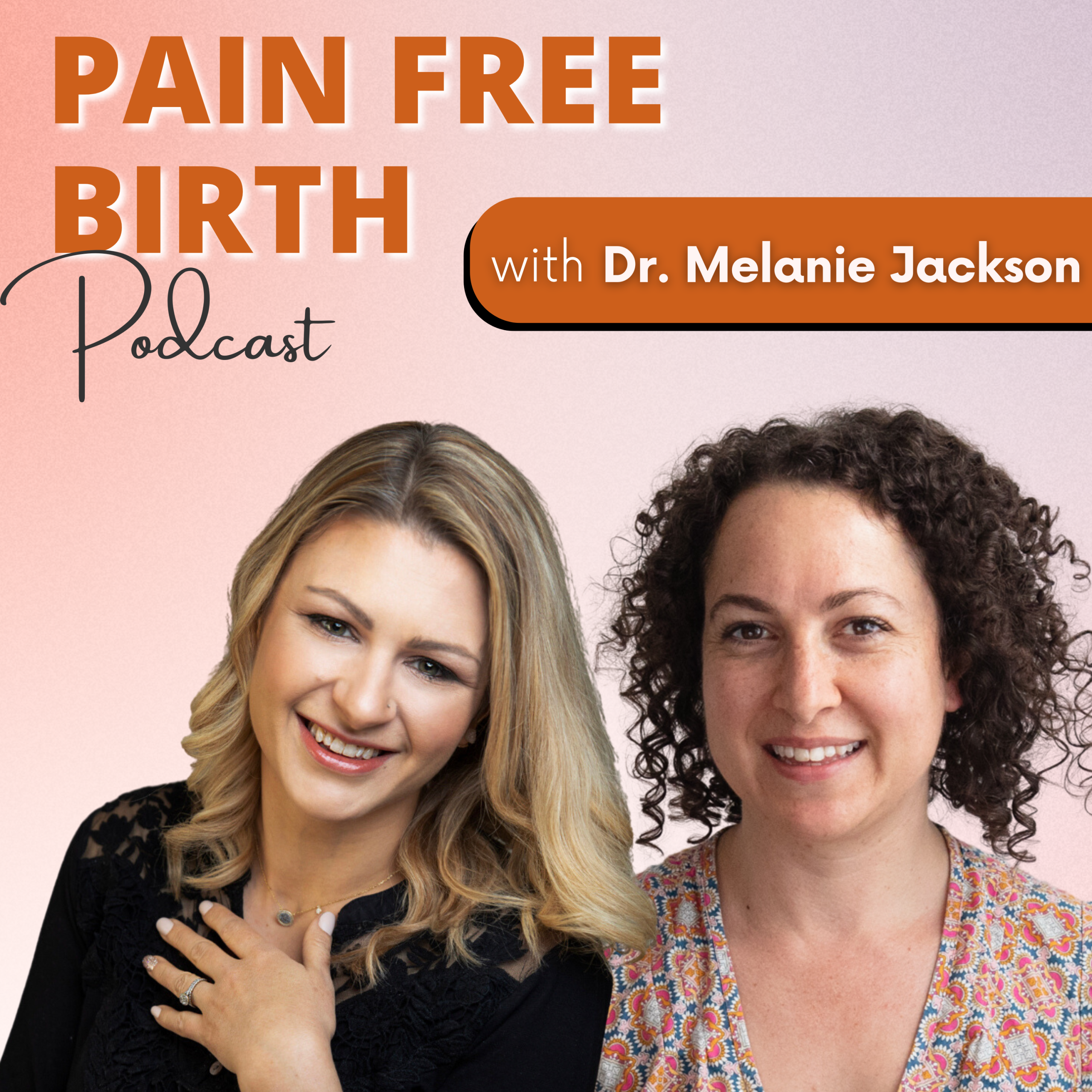
More about Melanie:
Dr Melanie Jackson (aka Melanie the Midwife) is a clinical and research midwife with 17 years’ experience. She hosts The Great Birth Rebellion podcast and founded The Convergence of Rebellious Midwives. Melanie shares evidence-based guidance for pregnancy, birth, and postpartum, and mentors midwives through The Assembly and her private practice mentorship program. She is also the creator of the newly launched Guide to Have a Great Birth—a comprehensive resource designed to help women prepare confidently for a physiological birth.
Connect with Melanie:
-
The Great Birth Rebellion Podcast — weekly evidence-based birth education
-
melaniethemidwife.com — courses and resources for women and midwives
-
@melaniethemidwife on Instagram
Want to Experience a Faith-Filled Birth Too?
If you’re ready to transform your mindset and birth with peace and purpose, check out the free Unlocking a Pain Free Birth Masterclass. Discover the 3 keys to a Pain-Free birth so you can experience the joyful, supernatural power of birth the way God designed it.