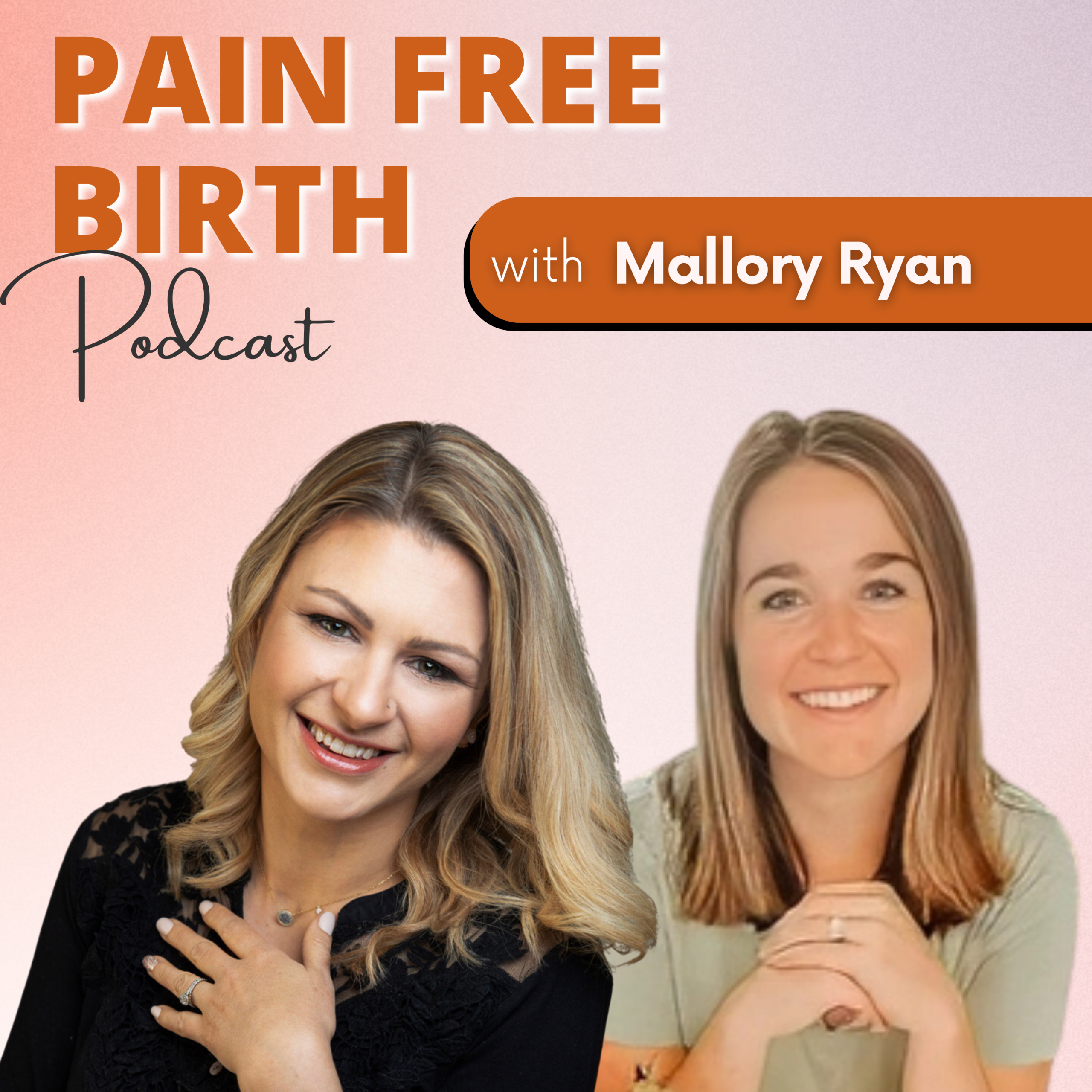
Many times, birth is presented as something to endure rather than something to experience with confidence and joy. Fear, uncertainty, and cultural narratives around pain often shape expectations long before labor begins. In this episode of the Pain Free Birth Podcast, Karen sits down with Mallory Ryan, a mother of two, to share a radically different perspective.
Mallory’s story includes two unmedicated births. Her first took place at a birth center in Atlanta, Georgia. Her second was a rapid home birth that unfolded in just over two hours. Through both experiences, Mallory discovered that mindset, understanding birth physiology, and trusting God’s design for the female body were far more influential than fear or external control.
This conversation is not simply a birth story. It is an exploration of how education, faith, and intentional relaxation can completely change the way labor is experienced.
Choosing an Unmedicated Birth and Trusting God’s Design
Mallory’s journey toward unmedicated birth began before she was ever pregnant. As she started learning more about holistic health and listening to other women’s experiences, she felt drawn to a more physiological approach to birth.
When she became pregnant with her first child, she knew she wanted to explore what God’s design for birth truly looked like. Through documentaries, books, and conversations with other women, Mallory felt a growing confidence that the female body was intentionally created to give birth.
Rather than believing there was one perfect place to give birth, she focused on choosing an environment where she felt supported, confident, and safe. For her first baby, that environment was a birth center. She recognized that in a hospital setting she might feel pressured to accept interventions she was not fully comfortable with. The birth center felt like a middle ground. It offered professional medical support while honoring her desire for an unmedicated, physiological birth.
This decision was not rooted in fear of hospitals or medical professionals. Instead, it was rooted in a desire for alignment between her values, her faith, and her body.
Preparing for Birth With the Pain Free Birth Course
Two months before her due date, Mallory enrolled in the Pain Free Birth course. At first, the name alone felt intimidating. Like many women, she wondered whether a pain free birth was even possible.
As she worked through the course, her perspective began to shift. What stood out most was learning about the physiology of birth and the stages of labor. Understanding what the body is actually doing during contractions gave her a sense of clarity and control that she had not experienced before.
Mallory is a visual learner, and one of the most impactful tools for her was the bell curve visualization used to explain contractions. Instead of viewing contractions as something to fight or escape, she learned to see them as waves that rise and fall. The most important moment was not the peak of the contraction, but the point where intentional relaxation could significantly reduce discomfort.
During labor, she visualized this bell curve and reminded herself that each contraction would last only a short time. By relaxing her body around the peak rather than tensing against it, she noticed a tangible reduction in pain.
This understanding became even more powerful during her second birth, when her labor progressed much more quickly.
How Environment Affects Labor Intensity
One of the most surprising realizations from Mallory’s first birth was that the most painful part of labor was not transition. It was triage.
Upon arriving at the birth center, she spent more time in triage than expected. The bright lights, unfamiliar layout, and need to stand disrupted her mental focus. Without the ability to fully relax and concentrate on her breathing and visualization, contractions felt significantly more intense.
Once she was settled into her birth room, everything changed. Her body responded immediately to the calmer environment. She was able to relax, focus inward, and allow labor to progress naturally.
This experience highlights an often overlooked truth about birth. Environment matters. Lighting, privacy, movement, and emotional safety all directly influence how the body releases hormones like oxytocin. When a woman feels watched, rushed, or uncomfortable, labor can feel more painful and less efficient.
Nature’s Epidural and the Power of Water
During transition with her first birth, Mallory entered the birth pool. She describes the water as nature’s epidural.
The warmth of the water allowed her muscles to soften and her nervous system to calm. While pushing in the tub was not ideal for her positioning, the water helped her move through transition with far less intensity.
This experience reinforced an important principle of physiological birth. Comfort measures that promote relaxation can be just as effective as medical pain management tools when used intentionally.
Praying for Progress and Recognizing Transition
Throughout labor, Mallory focused on praying for continual progress rather than a specific outcome. She knew that labor could be unpredictable, but she trusted that signs of forward movement would bring reassurance.
At home, contractions became more frequent. Her water breaking felt like another sign of progress. Upon arriving at the birth center, contractions intensified again. When she reached the point where she briefly considered wanting labor to stop, she remembered something she had learned in birth class. That moment often signals transition.
Rather than panicking, she reminded herself that this feeling meant her baby was close. Shortly after entering the birth pool, her son was born.
Releasing Fear and Reframing Pain
One of the most powerful moments in the conversation comes when Mallory explains how the Pain Free Birth course helped her rely on herself.
Initially, the concept of pain free birth felt unrealistic. But as she learned more about how God designed the body for birth, fear began to lose its power. She realized that pain does not have to equal suffering.
With the help of Christian hypnobirthing, affirmations, and faith centered preparation, Mallory reframed contractions as purposeful sensations rather than threats. One mantra stood out during labor.
Every contraction brings me one step closer to meeting my baby.
This mindset transformed her experience. Instead of resisting labor, she welcomed it.
Karen expands on this concept by explaining that contractions are not something happening to a woman. They are something happening within her. When fear is removed, the body and mind can work together rather than against each other.
Pushing, Positioning, and the Fetal Ejection Reflex
Mallory’s pushing experiences differed significantly between her two births.
With her first baby, she pushed for about forty five minutes. She delivered on all fours on the bed, which felt grounding and effective. Her midwife was hands off and encouraging, offering guidance without taking control. Her doula and husband provided steady emotional support.
Although pushing was intense, Mallory describes it as relieving and exciting rather than painful. She experienced the fetal ejection reflex, where the body bears down naturally without force.
Her second birth was even more remarkable.
Choosing Home Birth for the Second Baby
After reflecting on her first birth, Mallory and her husband felt confident pursuing a home birth for their second child. They wanted to address the few pain points from the birth center experience, primarily the initial disruption during triage.
One unexpected blessing of home birth was the deep relationship they built with their midwives throughout pregnancy. By the time labor began, Mallory felt excited rather than anxious for her care team to arrive.
She also felt confident in the level of medical care midwives provide at home. Living close to a hospital offered additional peace of mind, but her primary belief remained the same. Birth is not an emergency. It is a natural physiological process.
A Precipitous Home Birth in Under Three Hours
Labor with her second baby began around eleven at night. Contractions were immediately close together, starting about two minutes apart. Mallory recognized the rapid progression and had her husband call their midwife and doula.
They arrived just after one in the morning. Twenty minutes later, her daughter was born.
Despite the speed of labor, Mallory reports that it was less painful than her first birth. She attributes this largely to mindset and environment.
There were no bright lights, no unfamiliar noises, and no distractions. She labored in her bedroom, her safe space, with music playing and complete privacy. She visualized the bell curve, focused on her breathing, and stayed fully present.
She went through transition standing next to the bed without realizing it. Once she entered the tub, her daughter was born almost immediately.
The Butter Birth and Effortless Pushing
Mallory did not consciously push during her second birth. Her body did the work on its own.
After the birth, her midwife described it as a butter birth. The baby slid out smoothly and effortlessly.
Karen explains why this happens. When women are coached to push forcefully, tension builds in the pelvic floor. This tension increases the risk of tearing. The pelvic floor is not designed to push. It is designed to relax and move out of the way.
In Mallory’s case, relaxation allowed the body to open naturally, even during a fast birth.
Choosing Joy and Partnering With Biology
One of the most fascinating parts of the conversation centers on oxytocin. Mallory intentionally cultivated joy in the days leading up to labor. She watched comedy, spent time with her toddler, and focused on gratitude.
She believes this intentional joy helped her body naturally increase oxytocin levels, which supported efficient labor. Even during contractions, she chose to focus on music and positive imagery rather than fear.
Karen reinforces this by explaining that women have far more influence over their birth experience than they realize. Birth is not random. When women partner with their biology and choose joy, labor can unfold in a completely different way.
Birth as a Spiritual and Empowering Experience
Mallory describes birth as an out of body experience in the best possible way. She has never felt more empowered or more connected to God than during labor.
Understanding physiology helped her stay grounded, but faith gave meaning to the experience. Birth became an act of surrender rather than control.
This mindset carried into postpartum as well.
Postpartum and Motherhood Confidence
Mallory’s postpartum experiences were different with each baby. Her first included a brief NICU stay and breastfeeding challenges. Her second postpartum period was calm, supported, and redemptive.
Waking up in her own home just hours after birth and introducing her son to his baby sister created a peaceful beginning to motherhood.
She believes that empowering birth experiences influence confidence in parenting, breastfeeding, and beyond.
Encouragement for Moms Afraid of Pain
For women who feel curious about natural or unmedicated birth but remain afraid of pain, Mallory offers simple advice. Learn.
Understanding how the body works removes fear. Even women who choose hospital births can benefit from physiological education. Knowledge empowers choice.
Doctors and midwives support birth, but women are the ones giving birth. Trusting the body’s design can change everything.
Final Reflections on Joyful Birth
Mallory’s story is a powerful reminder that pain free birth does not mean numbness or avoidance. It means presence, trust, and surrender.
Birth can be intense without being traumatic. It can be powerful without being frightening. And it can be joyful, even in the most intense moments.
For women willing to learn, prepare, and trust their bodies, birth can become one of the most transformative experiences of their lives.
More about Blake:
Want to Experience a Faith-Filled Birth Too?
If you’re ready to transform your mindset and birth with peace and purpose, check out the free Unlocking a Pain Free Birth Masterclass. Discover the 3 keys to a Pain-Free birth so you can experience the joyful, supernatural power of birth the way God designed it.