The Oxytocin Blueprint: How Birth Hormones Shape Bonding, Pain Relief, and Postpartum Healing
What if birth was not just about delivering a baby, but about transforming a mother’s brain?
What if every contraction, every surge, every wave was part of a brilliantly designed hormonal blueprint meant to wire you for bonding, calm, resilience, and lifelong connection?
For decades, birth has been described as mechanical. Cervix dilates. Contractions intensify. Baby descends. But beneath that physical process is something extraordinary unfolding inside a woman’s brain and body.
Birth is a neurohormonal event.
At the center of it all is oxytocin.
Often called the love hormone, oxytocin is not sentimental or symbolic. It is biological. It is powerful. It is foundational to mammalian survival. And understanding it changes everything about how we view labor, intervention, bonding, and postpartum healing.
Let’s unpack what is really happening.
Birth Is Not a Mechanical Event. It Is a Hormonal Symphony.
Most systems in the body operate through negative feedback. If something rises too high, the body brings it down. If something drops too low, the body increases it. This is homeostasis.
Birth does not work that way.
Labor operates through positive feedback.
As contractions begin, pressure on the cervix sends signals to the brain. In response, the brain releases oxytocin. Oxytocin strengthens contractions. Stronger contractions create more cervical pressure. That pressure signals the brain to release even more oxytocin.
The cycle intensifies.
This is why labor builds. It is why early labor feels manageable and later labor feels powerful and consuming. The snowball is rolling.
Oxytocin is not just stimulating the uterus. It is simultaneously reshaping the brain.
How Oxytocin Changes the Brain in Labor
Oxytocin released in labor does two major things in the brain:
-
It activates the parasympathetic nervous system, reducing stress hormones and promoting calm.
-
It stimulates the reward and pleasure centers, especially dopamine pathways.
This means that as labor intensifies, the brain is simultaneously being wired for connection.
When a mother meets her baby, sensory input, sight, smell, touch, even taste, is neurologically linked to reward centers. The baby becomes associated with pleasure and fulfillment.
This is bonding.
It is not just emotional. It is physiological.
Research shows that oxytocin levels peak at birth and may rise even higher during the first hour postpartum, especially when mother and baby are skin to skin.
The system is designed for love.
The First Hour: A Window of Opportunity
The hour after birth is hormonally potent.
In physiological birth, oxytocin surges. The mother’s chest warms through vasodilation, helping regulate the baby’s temperature. The baby, also flooded with oxytocin, instinctively seeks the breast in what is known as the breast crawl.
The baby’s hands massage the mother’s chest. The smell of the areola resembles amniotic fluid. Reflexes guide attachment.
This is not random. It is orchestrated.
When breastfeeding begins in this window, long term breastfeeding outcomes improve. The entire neurohormonal cascade is supported.
It is a window of readiness, for both mother and baby.
Pain Relief Built Into the Design
Oxytocin works synergistically with endorphins, the body’s natural opioids.
As oxytocin rises, endorphins increase. These chemicals do not remove sensation, but they soften suffering. They create altered states of consciousness. They help mothers enter what many describe as “labor land.”
This is protective.
Mammals in the wild cannot panic in labor. A prey animal that runs or fights during birth endangers herself and her offspring. The body has built in calming mechanisms.
Oxytocin also appears to soften the memory of pain. Women who experience physiological birth often describe the intensity as powerful but not traumatic. Over time, the memory fades in sharpness.
Again, this supports survival.
Synthetic Oxytocin: Same Molecule, Different Experience
Synthetic oxytocin, commonly known as Pitocin, is chemically identical to natural oxytocin.
But it is administered into the bloodstream, not released inside the brain.
That difference matters.
Natural oxytocin is released from and within the brain. Synthetic oxytocin primarily circulates in the bloodstream and acts on the uterus. It does not significantly cross back into the brain to activate calming and bonding centers.
This means contractions can intensify without the full neurological support system that normally accompanies them.
When used at high doses or early in labor, synthetic oxytocin may produce stronger and closer contractions before the body’s natural endorphin system has ramped up. This can increase perceived intensity and stress.
However, research suggests that using the lowest effective dose may reduce risks. Lower dose protocols appear to work just as effectively while minimizing uterine overstimulation.
The key is balance and support.
Induction and Readiness: The Bishop Score Matters
Labor begins when both mother and baby are hormonally ready.
Estrogen has increased. Oxytocin receptors in the uterus have multiplied dramatically. The cervix has softened and begun to thin. Inflammatory pathways are activated. The baby’s lungs are ready for air.
This coordination is exquisite.
When induction occurs before full readiness, the body may require more intervention. The Bishop score, which assesses cervical readiness, gives insight into how prepared the body is.
A high Bishop score suggests proximity to spontaneous labor. A low score may mean more preparation is needed, such as cervical ripening.
If induction is necessary, protecting oxytocin becomes even more important:
-
Maintain privacy and emotional safety
-
Dim lights and reduce sensory overload
-
Use the lowest effective dose of synthetic oxytocin
-
Encourage movement if possible
-
Incorporate nipple stimulation, which releases natural oxytocin
-
Stay supported by familiar people
Even in medical settings, physiology can be supported.
Epidurals and the Oxytocin Feedback Loop
Epidurals interrupt sensory feedback from the cervix and uterus to the brain.
Without those signals, the brain releases less oxytocin.
Studies reviewing maternal blood levels suggest that women with epidurals may not experience the same surge of oxytocin at birth compared to those who birth physiologically.
This can contribute to:
-
Longer pushing stages
-
Increased need for assisted delivery
-
Reduced immediate oxytocin peak
It does not mean bonding cannot happen. It does mean the cascade may be dampened.
Understanding this helps explain why some women report feeling disconnected after heavily medicated births. It also helps us understand why skin to skin and breastfeeding are so critical afterward.
Cesarean Birth and Hormonal Gaps
Pre labor cesarean birth bypasses the entire labor cascade.
Oxytocin levels in both mother and baby are lower compared to physiological birth. Babies may be less alert initially. Mothers may not experience the same hormonal peak.
This is not a failure.
It is a gap.
And gaps can be filled.
Extended skin to skin contact stimulates oxytocin release. Breastfeeding triggers pulsatile oxytocin release with every feed. Even bathing together skin to skin can activate bonding reflexes.
One mother described that after several days of consistent skin to skin following cesarean birth, her baby “felt the same” as her previous babies born vaginally.
Healing is possible.
Breastfeeding: Mother Nature’s Backup System
Every time a baby suckles, oxytocin is released in the mother’s brain and bloodstream.
This:
-
Stimulates milk ejection
-
Promotes uterine involution
-
Reduces stress
-
Reinforces bonding
Breastfeeding is not only nutrition. It is neurohormonal reinforcement.
Studies show that exclusive breastfeeding over several months can help fill hormonal gaps left by epidural or cesarean birth. Maternal stress levels decrease. Sociability increases. Calmness deepens.
Even when breastfeeding is not possible, skin to skin contact remains powerful.
The system is resilient.
The Hospital Environment and Oxytocin
Oxytocin is a hormone of safety.
In the wild, a mammal will not labor effectively in the presence of threat. Bright lights, unfamiliar smells, frequent interruptions, loud noises, and unfamiliar people can signal danger to the primitive brain.
When a woman feels unsafe, adrenaline rises. Adrenaline can inhibit oxytocin release.
This is why labor may slow upon arrival at a hospital.
Creating a sense of safety matters:
-
Limit unnecessary interruptions
-
Dim lighting
-
Familiar support people
-
Calm, respectful communication
-
Privacy
Birth is relational. The people in the room matter.
Healing After Birth Trauma
Some mothers do not experience the “birth high.” Some feel numb. Some feel disconnected.
Understanding oxytocin helps remove shame.
If the hormonal cascade was disrupted, the experience may feel different. That does not mean love is absent. It means physiology was altered.
Healing pathways include:
-
Skin to skin contact daily
-
Babywearing
-
Eye contact during feeds
-
Slow, intentional feeding experiences
-
Co bathing when safe
-
Gentle touch and massage
Oxytocin can still be released. Neural pathways can still be strengthened.
Bonding is not a single moment. It is a relationship.
Why This Research Matters
For years, birth workers have observed what science is now beginning to measure.
Physiological birth supports optimal neurohormonal outcomes.
That does not mean interventions are always wrong. It does mean we should respect what the body is designed to do.
Thirty years ago, formula feeding was considered equal to breastfeeding. Now we understand that human milk is biologically superior for human infants.
In the same way, we are rediscovering that physiological birth is biologically optimized.
When safe and possible, protecting it matters.
Practical Ways to Protect Your Oxytocin
Whether planning home birth, birth center, or hospital birth:
-
Stay home as long as safely possible in early labor
-
Surround yourself with people you trust
-
Protect privacy
-
Keep lighting low
-
Minimize unnecessary vaginal exams
-
Use movement and upright positions
-
Practice relaxation and surrender
If induction is needed:
-
Ask about starting low and increasing slowly
-
Incorporate nipple stimulation
-
Use massage and touch
-
Maintain emotional safety
If epidural or cesarean occurs:
-
Prioritize immediate or early skin to skin
-
Keep baby close
-
Breastfeed or provide breast stimulation if possible
-
Be patient with bonding
Your body was designed with redundancy. Even when the path shifts, connection remains possible.
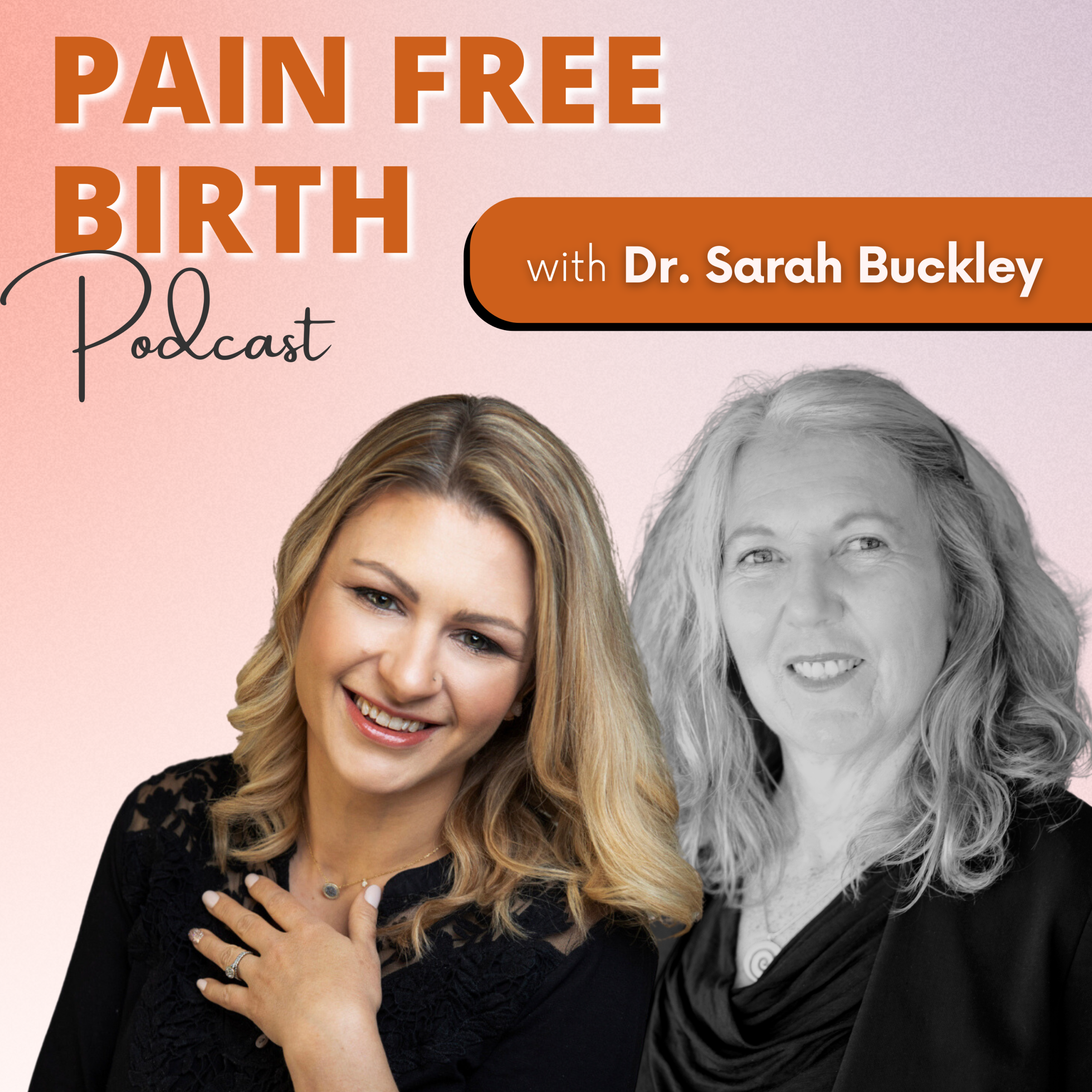
More about Dr Sarah Buckley:
- Links to all of Sarah’s PhD publications https://sarahbuckley.com/hormonal-physiology-and-more/
- Epidurals https://sarahbuckley.com/httpsarahbuckley-comblogepiduralrisks-faqpt1/
- How to have the best caesarean https://sarahbuckley.com/how-to-have-the-best-cesarean/
- Induction https://sarahbuckley.com/labour-induction-making-choices/
- Synthetic oxytocin (Pitocin) myths and side effects https://sarahbuckley.com/pitocin-side-effects-part1/
- Synthetic oxytocin (Pitocin) and autism https://sarahbuckley.com/does-pitocin-cause-autism/
- Website: www.sarahbuckley.com
- FB: @DrSarahBuckley
- IG: @DrSarahJBuckley
- Twitter: @Sarahjbuckley
Want to Experience a Faith-Filled Birth Too?
If you’re ready to transform your mindset and birth with peace and purpose, check out the free Unlocking a Pain Free Birth Masterclass. Discover the 3 keys to a Pain-Free birth so you can experience the joyful, supernatural power of birth the way God designed it.