Birth is usually discussed from one point of view. The mother’s. Her sensations. Her contractions. Her progress. Her hormones. Her emotions. Yet every birth is also the baby’s birth. It is the moment a new human transitions from one world to another and that experience is profound.
What if understanding the baby’s perspective could improve birth outcomes, reduce trauma, and strengthen bonding for both mother and child? This is the foundational idea behind the work of neonatal resuscitation instructor and midwife Karen Strange. With more than three decades of experience and over 17,000 birth professionals trained, Strange teaches a baby centered, trauma informed, physiologic understanding of birth that has changed the approach of countless parents and providers.
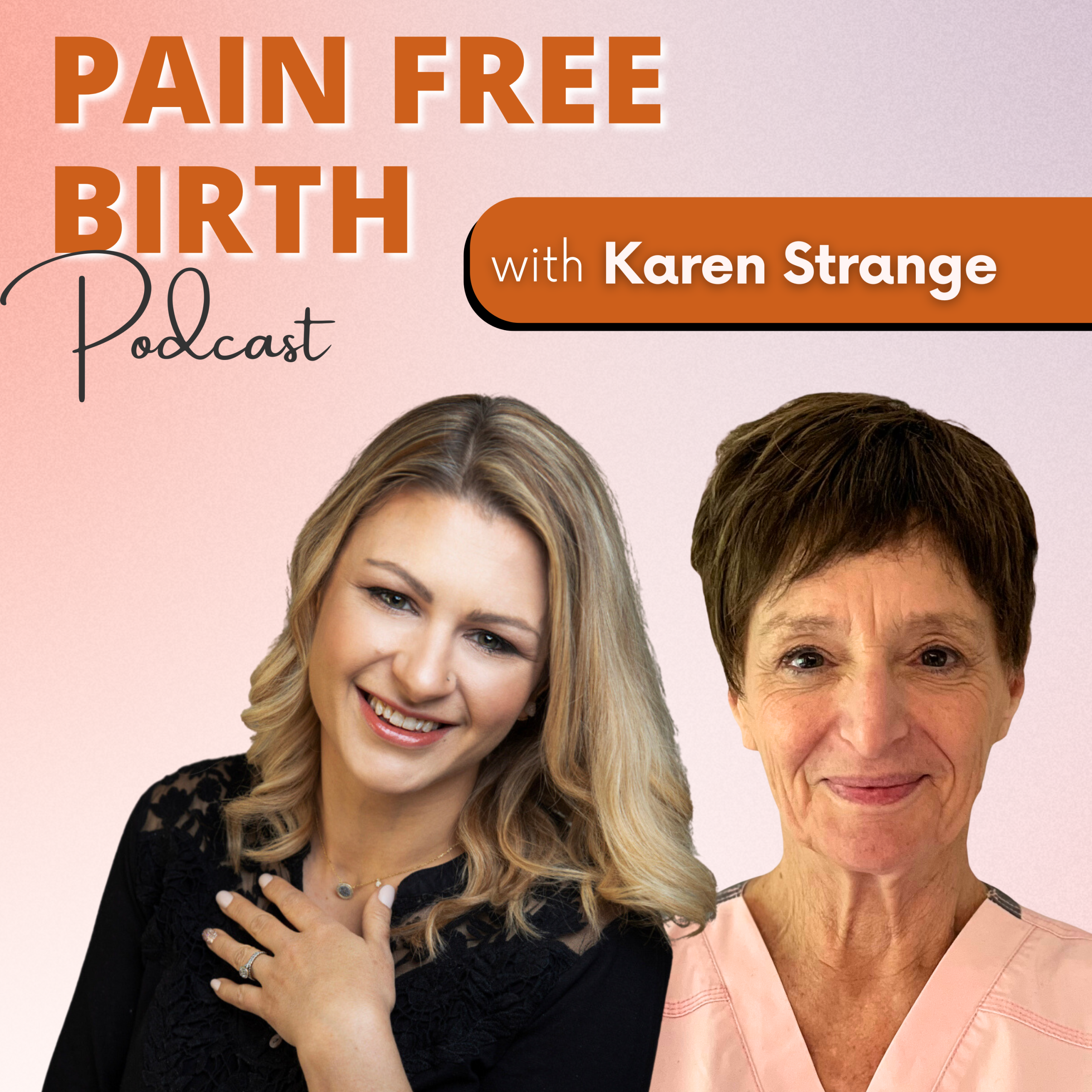
In a powerful conversation on the Pain Free Birth podcast, host Karen Welton explored Strange’s teachings on newborn consciousness, the embryological blueprint, the importance of the pause after birth, the meaning of imprints and interruptions, and the vital role of repair.
This blog integrates these insights into a single educational resource. The intention is to help parents and birth workers understand what babies experience before, during, and after birth and how this knowledge can support both healing and connection.
1. The Baby’s Perspective of Birth and Why It Matters
Most prenatal education focuses on the laboring mother. How she copes with contractions. How her cervix dilates. How she manages pain. How she advocates for herself.
Yet birth is also a monumental event for the baby. Babies are not passive passengers. They are fully engaged participants in the birth process. Their physiology. Their psychology. Their nervous system. Their survival instincts. Everything activates during labor and birth.
Strange invites parents and providers to consider a transformative question.
What is the baby experiencing right now?
This question changes the framework of birth. Birth is not something that happens to a baby. Birth is something a baby actively does and moves through. When we view birth from the baby’s perspective we honor:
-
the intelligence of the newborn
-
the importance of the physiologic sequence
-
the meaning behind newborn behaviors
-
the need for gentleness and pacing
-
the healing power of connection
This shift allows birth to be seen not only as a medical event but as a relational event. A transition that deserves reverence and attunement.
2. The Embryological Blueprint and Nature’s Sequence
One of Strange’s most foundational teachings is the concept of the embryological blueprint. Humans come into being according to a precise developmental design that is encoded in our cells. Everything from the first cell division to the onset of labor follows this predetermined sequence.
This blueprint governs:
-
conception and implantation
-
early development
-
gestation
-
pre labor changes
-
the process of labor
-
the moment of birth
-
newborn transition
The blueprint unfolds step by step. Each stage depends on the previous one. When the sequence is respected and uninterrupted the baby integrates each experience smoothly. This lays the foundation for:
-
regulation
-
secure attachment
-
nervous system development
-
resilience
-
early bonding
When the sequence is interrupted the body and psyche form an imprint. The imprint reflects what actually happened. It may include stress, fear, medical intervention, separation, or trauma. Even when this occurs the blueprint underneath remains unaltered. It is still available. It is still whole.
Knowing this gives parents hope. The body does not lose the blueprint. Repair is always possible.
3. Pauses, Integration, and Slower Pacing
A central theme in Strange’s work is the importance of pauses. Pauses are biologically built into human development. They exist at the cellular level and continue throughout the entire birth process.
There is a pause at conception.
A pause during cell division.
A pause in early gestation.
A pause in labor.
And a pause at the moment a baby is born.
Pauses allow the nervous system to integrate what has just occurred. They allow the baby to settle, regulate, and recognize safety.
Despite this natural rhythm modern birth often interrupts pauses. Our culture tends to rush birth because of fear or unfamiliarity with physiology. Yet babies emerge from a world where everything unfolds slowly. They are not designed for fast transitions, loud environments, or immediate stimulation.
Strange often says that everything essential happens in stillness. Babies thrive when pacing is gentle and respectful.
4. The Baby’s Experience in the Womb: Consciousness and Memory
Scientific research in prenatal psychology, epigenetics, and developmental neuroscience shows a clear truth. Babies are conscious and aware in the womb.
They feel.
They sense.
They respond to sound and emotion.
They recognize voices.
They adapt to their mother’s internal world.
They store memory.
This is not metaphorical. It is biological. A baby’s nervous system is shaped by the mother’s experiences during pregnancy. If she feels safe and connected her baby learns regulation and security. If she feels overwhelmed or constantly stressed her baby learns heightened vigilance.
This is not a reason for guilt. It is a reason for connection.
Parents can repair stress by talking to the baby. They can acknowledge their feelings and reassure their baby with words of safety and love. Strange teaches that babies respond to the tone and intention of communication long before they are born.
Talking to the baby strengthens bonding, emotional attunement, and the baby’s sense of belonging.
5. Interruption, Imprint, and the Power of Repair
Strange uses two important concepts to describe what happens in the prenatal, birth, and postpartum experience.
The Blueprint
This is the original, ideal developmental sequence. It is perfect, whole, and always present.
The Imprint
This is what actually occurred. These are the experiences that overlay the blueprint. They may include stress, intervention, separation, or emergency events.
Every human has imprints. No one experiences a perfect sequence. This should not frighten parents because the key to healing is not perfection. The key is repair.
Strange explains that repair is part of the human experience. Repair is how secure attachment is formed. Repair is how babies release stress. Repair is how relationships become strong.
A rupture without repair leads to difficulty. A rupture with repair creates resilience. Babies do not need perfect parents. They need parents who respond with presence and acknowledgment.
Parents can repair with babies through simple practices:
-
acknowledging what the baby experienced
-
naming feelings
-
offering eye contact
-
slowing down
-
saying “I see you” or “I hear you”
-
recognizing frustrations or fears
-
providing consistent nurturing
This transforms imprints into integration. The blueprint becomes accessible again.
6. The Sacred Pause After Birth
In most mammal species birth is instinctual and undisturbed. The mother births her baby and both pause. The baby is not touched. The mother does not panic. No one stimulates the baby. There is simply stillness.
Humans have moved away from this natural sequence. Many birth environments immediately introduce:
-
stimulation
-
rubbing
-
talking
-
clapping
-
suctioning
-
bright lights
-
forced latch attempts
-
cutting the cord quickly
Strange teaches that this rush is overwhelming for newborns. They have never been touched before. They have never felt air. They have never seen light.
Babies need a moment to arrive.
They need silence.
They need a breath from those around them.
They need respectful pacing.
If no one were there the first thing a mother would do is look at her baby. She would pause. She would recognize this new life. She would allow the baby to orient.
This pause is biologically protective. It supports regulation and early bonding.
7. Why Rushing Hurts the Process
Rushing at birth often comes from fear. Fear that the baby will not breathe. Fear that something will go wrong. Fear from our own unresolved birth imprints. These fears create a sense of urgency and pressure.
Strange teaches that the solution is not to freeze. The solution is to breathe. When a parent or birth worker takes a breath the energy in the room shifts. Babies feel this.
Adults regulate the baby’s nervous system. If parents are grounded and calm the baby more easily transitions into their body.
Supporting the pause prevents unnecessary trauma and protects bonding.
8. The Story Babies Tell With Their Bodies
Babies communicate through movement. Every repetitive behavior is meaningful. It is the baby’s way of telling the story of their birth.
For example:
-
A baby who was suctioned might show aversion at the breast.
-
A baby who felt stuck may arch or push.
-
A baby separated from the mother may cling intensely.
-
A baby who experienced fear may cry in a specific pattern.
These movements are not problems that need correction. They are stories that need acknowledgment. Babies need someone to witness what they are expressing.
Strange teaches that when parents reflect back what they see the baby naturally moves toward completion of the sequence. This brings the baby back to the blueprint.
9. Newborn Physiology and the First Breath
Understanding what babies need physiologically is essential for both safety and confidence. In the womb babies do not breathe air. Their lungs are filled with fluid and oxygen comes through the umbilical cord.
After birth several events must occur:
-
The cord continues providing oxygen.
-
Blood flows into the lungs.
-
The air sacs open.
-
The fluid is cleared.
-
The baby takes its first breath.
Delayed cord clamping supports this transition. Babies need their full blood volume to open the lungs and perfuse the brain.
When a baby does not breathe immediately the solution is often simple. Gentle breaths help clear the remaining lung fluid. This is not the same as aggressive stimulation. It is calm, mindful support of physiology.
Parents and doulas can learn these steps. In many situations this knowledge can save a life.
10. Empowering Parents With Lifesaving Knowledge
Strange believes that parents and doulas deserve to understand the basics of newborn transition. They are often present before the provider arrives in fast labors or unexpected situations. Knowledge creates calm action rather than panic.
The most common reason for delayed breathing is the presence of fluid in the lungs. Five gentle breaths can help the baby transition. This is simple, safe, and effective.
Parents can feel empowered knowing what to do if:
-
the baby is born quickly
-
the baby is born in a car
-
the midwife or provider has not arrived
-
the baby appears slow to transition
Knowledge is confidence. Confidence is safety.
11. What Every Parent Should Know Before Birth
Throughout the conversation Strange emphasized truths every expecting parent should hear.
Babies are conscious in the womb.
They experience their environment and respond to emotional tone.
Talking to your baby matters.
It builds the baby’s nervous system and sense of safety.
Pauses are essential.
They allow integration during pregnancy, birth, and postpartum.
You can always repair.
Every rupture contains the possibility of healing.
The blueprint is untouched.
No matter what happened, the baby’s original template for connection and regulation remains.
Babies communicate through their bodies.
Listening creates deep trust.
Slowness supports safety.
Gentle pacing helps babies feel secure.
These truths form the foundation for healthy bonding and lifelong regulation.
12. Conclusion: Birth Is Designed to Work and Repair Is Always Possible
One of Strange’s most well known teachings is the reminder that birth is not inherently dangerous. Nature designed birth to work even in the absence of assistance.
Birth works because mothers and babies are biologically equipped for this process. Birth works because it follows a blueprint. Birth works because the sequence is ancient and intelligent.
When interruptions happen the blueprint remains underneath. Imprints can be repaired through presence, acknowledgment, and connection.
Parents do not need perfection. Babies do not expect perfection. What creates healing is relationship and attunement.
Birth is not only the beginning of life. Birth is also the beginning of relationship. When we honor the baby’s experience and support the natural sequence we offer our children the gift of safety and connection from the very start.
Strange’s message is one of deep hope. Hope for mothers. Hope for babies. Hope for birth workers. Hope for anyone who has ever wondered whether healing is possible.
It is. And it begins with presence, compassion, and understanding.
Additional Resources from Karen: https://drive.google.com/drive/folders/1UAA9yc7-JbMdO-qbYiQZl9XLn8yTmY8P?usp=sharing
More about Karen:
Want to Experience a Faith-Filled Birth Too?
If you’re ready to transform your mindset and birth with peace and purpose, check out the free Unlocking a Pain Free Birth Masterclass. Discover the 3 keys to a Pain-Free birth so you can experience the joyful, supernatural power of birth the way God designed it.