For many women, the birth environment plays a major role in how safe, calm, and confident they feel during labor. When a mother has already experienced peaceful home births, the thought of moving into a hospital setting can bring a completely different set of emotions, especially when that change happens unexpectedly.
For Siera, that shift came halfway through pregnancy when she learned she was carrying twins. After two previous home births with the same trusted midwife, she planned to welcome her next baby at home again. Instead, her 20-week anatomy scan revealed spontaneous di/di twins, a boy and a girl. Suddenly, she was navigating hospital policies, obstetric care, questions about twin delivery, and fears surrounding interventions she had never needed to consider before.
In this episode of the Pain Free Birth Podcast, Siera shares how she learned to advocate for herself without becoming combative, how she created an intentional birth plan, and how prayer helped her move from preparation into surrender. At 39 weeks and 1 day, she gave birth to both twins vaginally in a standard hospital room without an epidural, supported by a team that ultimately respected the physiological birth she had worked so hard to protect.
Her story is a beautiful reminder that when circumstances change, a mother does not necessarily have to abandon the values that matter most to her in birth. With education, preparation, clear communication, supportive providers, faith, and flexibility, birth can still feel peaceful, empowering, and deeply personal.
Discovering Twins at the 20-Week Ultrasound
Siera entered her third pregnancy expecting something familiar. She had worked with the same midwife during both previous home births and hoped that pattern would continue. Home was where she felt relaxed and confident, so she had little reason to imagine that this pregnancy would look dramatically different.
This pregnancy did feel harder physically. Siera was more nauseous, more fatigued, and felt much larger than expected. She remembers telling her husband and friends that she felt at least four weeks further along than she was. Because she had not had an early ultrasound, she assumed her dates might be off and thought the anatomy scan might reveal a new due date.
Twins never seriously crossed her mind.
When the ultrasound wand was placed on her belly at the 20-week scan, however, two heads appeared on the screen almost immediately. Siera began sobbing. The discovery was a complete shock. There was no known history of twins in her family, and spontaneous twins had never felt like a real possibility.
She and her husband were thrilled. They wanted a large family, and in Siera’s words, it was simply happening a little faster than expected. But after the excitement came a more difficult realization. Her trusted midwife did not attend twin home births.
The birth she had envisioned was suddenly uncertain.
Grieving the Loss of Her Planned Home Birth
Siera describes going through a real grieving process after discovering she could no longer plan another home birth with the midwife she trusted.
Home was more than a location. It was the environment where she felt comfortable, confident, and free during labor. She had already experienced two births there and knew how deeply that sense of safety supported her.
Siera and her husband explored other options. They contacted midwives who might attend twin births at home, but most immediately declined. They eventually found a midwife duo willing to consider it, but Siera did not feel comfortable enough with their level of experience.
Rather than choosing home birth with providers she did not fully trust, Siera established care with a hospital OB team while continuing prenatal visits with her original midwife.
That combination became important. The hospital team would manage the twin pregnancy and delivery, while her midwife remained a familiar source of support. Siera often felt anxious before hospital appointments, so being able to process those visits afterward with someone who knew her and understood her birth philosophy helped her navigate a completely different model of care.
Confronting Standard Hospital Policies for Twin Birth
At one of Siera’s first OB appointments, the provider explained the hospital’s standard policies for twin delivery.
She was told that twin births took place in the operating room. Once she reached approximately eight centimeters or began feeling the urge to push, she would be transferred from the labor room to the OR. At this hospital, she would also need to deliver directly on the operating table.
For Siera, that environment felt deeply unsettling.
She pictured bright fluorescent lights, a narrow operating table, and more than a dozen people surrounding her. There would be staff for each baby, NICU personnel, an anesthesiologist, and the obstetric team. Even though the goal was still vaginal birth, the setting felt incredibly close to preparing for surgery.
Siera understood why a hospital might want rapid access to a Cesarean if an emergency arose. What she struggled with was being moved into the operating room before there was a medical reason to do so.
The environment mattered because she already knew how strongly relaxation affected her ability to labor physiologically. She wanted to protect that as much as possible.
Facing the Possibility of a Breech Second Twin
Another major concern involved Baby B.
Siera knew that even if both twins were head down before labor, Baby B could potentially change position after Baby A was born. Once the first baby left the uterus, there would suddenly be more room for the second twin to move.
She intentionally asked her providers how they would handle a breech second twin.
At first, she felt reassured when told that the OB team was trained in breech delivery. As she continued asking more detailed questions, however, she learned that their typical approach would be breech extraction.
That possibility required thought. Siera had heard that breech extraction could be physically intense and invasive, so she needed to decide whether she would prefer that option or move to a Cesarean if Baby B became breech.
Ultimately, she decided that she would prefer to continue toward vaginal birth and accept the possibility of breech extraction rather than automatically choose surgery. She also knew she could reconsider if circumstances changed.
Baby B’s position remained one of her greatest fears during pregnancy, but instead of constantly rehearsing the worst-case scenario, Siera gathered information, made a plan, and worked to release the fear.
Learning That Hospital Policy Is Not the Same as Consent
After hearing the hospital’s policies, Siera remembers sitting in the car with her husband and crying. She struggled to picture the peaceful, physiological birth she wanted while lying on an operating table surrounded by a large medical team.
More importantly, she did not initially know whether she had the right to decline.
Because her previous births had been at home, Siera had little experience navigating hospital systems. When an OB said something was hospital policy, it sounded final. She wondered whether she actually had a choice.
That began to change after she listened to an episode of the Pain Free Birth Podcast featuring the Intentional Birth Doulas. Through that conversation, Siera learned more about patient rights, informed consent, and how to advocate within a hospital without approaching the relationship as a battle.
She realized that she could hear a recommendation, understand the reasoning behind it, consider the risks, and still make her own informed decision.
That shift changed the rest of her pregnancy.
Creating a Birth Plan That Communicated Her Values
Before this pregnancy, Siera had never needed a detailed written birth plan. Her home birth environment had naturally aligned with many of her preferences.
Preparing for a hospital twin birth required something different.
Siera created a concise, one-page birth plan that introduced who she was and what mattered to her. She explained that she had previously birthed at home, that home was where she felt most comfortable, and that she had chosen the hospital because of the twin pregnancy.
She also acknowledged that some of her preferences fell outside standard hospital policies. Importantly, she communicated that she had considered the risks involved and remained willing to change her decisions if new information or circumstances arose.
This allowed her plan to be both firm and flexible.
At the center of the document were four birth values: consent, physiological birth, mother-led care, and calm, gentle energy.
Those values gave context to everything else. Her desire to remain in a standard delivery room was connected to preserving a calm environment. Her desire for freedom of movement supported physiological birth. Her choices surrounding monitoring were rooted in autonomy and consent.
The birth plan was not simply a list of things she wanted. It explained why those choices mattered.
Choosing Which Hospital Practices Mattered Most
Siera was intentional about not turning every routine hospital procedure into a point of conflict.
For example, she was comfortable having a saline lock. She knew some women choose to decline one, but it was not important enough to her to spend emotional energy pushing back.
Monitoring was different.
Because she was carrying twins, the hospital recommended continuous fetal monitoring. There was also discussion of using a fetal scalp electrode on Baby A so the team could better distinguish between the two babies’ heart rates.
Siera felt this would limit movement and create a more invasive experience than she wanted, so she included intermittent electronic fetal monitoring in her birth plan.
She described this approach as choosing her battles. Her goal was not to reject everything associated with hospital birth. She wanted to identify the practices that would most affect her ability to labor physiologically and focus her advocacy there.
That balance helped her work with the medical team rather than against them.
Reading Her Birth Plan Aloud and Finding Her Voice
One of the most practical things Siera did was add a signature section to the bottom of her birth plan. The signature did not mean the OB agreed with every choice. It simply confirmed that the provider had discussed the risks, benefits, and alternatives associated with the plan.
Siera wanted that documentation because she knew the physician attending her birth could be someone she had never met. She did not want to be in active labor while repeatedly defending decisions she had already discussed during pregnancy.
She also began reading the birth plan aloud at prenatal appointments.
That practice became unexpectedly powerful.
Even when her voice shook, Siera made herself say the words. Each time she explained that she intended to remain in a standard delivery room unless a Cesarean became medically necessary, she became more confident.
At one appointment, the OB paused and acknowledged that Siera could decline the operating room policy.
That confirmation mattered.
Siera realized she did not have to ask whether she would be “allowed” to remain in a delivery room. She could make an informed choice and communicate it respectfully.
Preparing Thoroughly, Then Surrendering the Outcome
After creating her birth plan and having the necessary conversations, Siera eventually reached a point where there was nothing more she could control.
She still did not know which OB would be working when she arrived. She did not know how Baby B would position himself after his sister was born. She did not know whether an unexpected medical situation would arise.
This is where her preparation shifted from practical to spiritual.
Siera began spending intentional time in prayer, asking God to meet her in a hospital environment that still felt intimidating. She prayed that she would birth with faith rather than fear and asked that the OB attending her birth would be receptive to her preferences, gentle in care, and slow to intervene unnecessarily.
She also invited friends and family to pray specific prayers over the birth.
For Siera, surrender became an important part of preparation. She believed it was good to research and plan, but she also knew she could not prepare her way into complete control.
At some point, she had to trust.
Protecting Her Mind From Fear
Baby B becoming breech remained Siera’s greatest source of anxiety as birth approached.
She had already gathered the information she needed and decided what she would likely choose if that scenario happened. Once she had a plan, however, she intentionally stopped allowing herself to dwell on it.
Siera kept a list of birth affirmations in her phone. Many were rooted in her faith. She reminded herself that nothing was impossible for God, that she could trust Jesus to care for her, and that she was surrounded by His protection.
One affirmation focused on being covered by protective wings. That image would later become deeply meaningful during labor.
Siera was not pretending fear did not exist. She acknowledged it, then redirected her thoughts toward what she wanted to believe and expect.
Protecting her mind became just as important as preparing her birth plan.
Carrying Twins to 39 Weeks
Throughout pregnancy, Siera had repeatedly heard that twins usually come early. Her initial goal was simply to reach 37 weeks.
She intentionally rested during the later weeks because she wanted to give both babies as much time as possible.
Then 37 weeks came and went.
By the end of pregnancy, Siera’s belly was measuring around 47 weeks. The physical demand of carrying two nearly full-size babies was intense.
The day before reaching 39 weeks, she saw her midwife. Knowing the OB team would likely begin discussing induction, Siera chose to have a cervical check and membrane sweep with the provider she trusted most.
Her cervix was already around three centimeters dilated and soft.
Later that day, mild contractions began and she started losing some of her mucus plug, but nothing felt like active labor.
At her OB appointment the following day, the team told her she could come in whenever she was ready and be admitted. Siera asked for another day or two to see whether labor would begin naturally, and the provider was comfortable with that choice.
Arriving at the Hospital at Five Centimeters
By that evening, Siera believed she had progressed to around five centimeters. Her contractions were still mild and inconsistent, but because her previous labors had moved quickly once her water broke, her midwife encouraged her not to wait too long.
The next morning, at 39 weeks and 1 day, Siera and her husband decided to go to the hospital.
Before leaving, her husband called ahead and asked whether she could be paired with a nurse who was excited about physiological birth.
That simple request ended up making a meaningful difference.
When they arrived around noon, Siera was still not in active labor. She put in earbuds and listened to worship music while wearing red-lensed blue light blocking glasses to soften the fluorescent lighting. She allowed her husband to handle most of the communication while she focused inward.
She was intentionally creating a sense of safety before active labor even began.
Receiving the Supportive Nurse She Had Prayed For
In triage, Siera quickly realized that her nurse had already read the birth plan.
She did not need to begin the relationship by defending her choices. The nurse understood that Siera wanted a physiological birth and approached her care with that in mind.
While they waited for the hospital’s largest delivery room to be prepared, the nurse even helped Siera with Spinning Babies movements.
Siera completed an initial period of fetal monitoring to establish that both babies were doing well. Once their heart rates looked reassuring, she was able to remove the monitors and move freely.
A cervical check confirmed that Siera was indeed five centimeters.
By approximately 3:30 that afternoon, she was moved into the delivery room and met the OB who would attend the birth.
It was someone she had never met before.
The OB Asked Siera What She Wanted
Despite never having met, the OB immediately made Siera feel respected.
Rather than beginning by telling her what needed to happen next, she asked what Siera wanted to do.
For a mother who had spent months preparing to advocate for herself, that question was significant.
Siera and her team had already discussed artificially rupturing Baby A’s membranes. Because she was five centimeters and her body appeared ready, she chose to move forward.
Her husband prayed over her, and then the OB broke Baby A’s water.
Within minutes, Siera experienced her first truly intense contraction.
Her body moved rapidly into active labor.
Moving Through Transition With Relaxation
Over the next hour, Siera moved around the room and followed her body. She used the birth ball, labored on the toilet, and changed positions as contractions intensified.
Eventually, she recognized the familiar sensation of transition.
Siera knew this stage triggered an instinct in her to flee. The intensity was rising, pushing was approaching, and part of her wanted to escape what was happening.
Instead, she made a conscious shift.
She chose to relax into the contractions rather than resist them.
Siera eventually lay on her side with one leg supported by a peanut ball. That position allowed her body to release more completely. She could feel Baby A’s head rotating through her pelvis while also feeling Baby B moving inside her uterus.
The experience made her feel deeply connected to both babies and to the process unfolding inside her body.
So Relaxed Her Midwife Thought She Was Sleeping
Around 6:00 p.m., Siera’s midwife documented that she appeared to be taking a nap.
She was not sleeping.
Siera had placed a washcloth over her eyes and become so deeply relaxed that the people around her did not realize her body had begun involuntarily pushing.
During that time, she experienced one of the most spiritual moments of the birth. With her eyes closed, she pictured an angel’s wing covering her like a blanket. She felt profoundly protected and surrounded by God’s peace.
The image connected directly to the affirmation she had repeated during pregnancy about being covered by protective wings.
For Siera, the moment felt like a tangible answer to prayer. The hospital environment she had once feared had become a place where she felt deeply calm and protected.
Creating Space for Siera to Lead Her Own Birth
Once Siera told the team her body was pushing, additional staff began entering the room. Because this was a twin birth, there were naturally more people involved than there would be for a singleton delivery.
Siera kept the washcloth over her eyes so she would not become distracted by the activity around her.
Then she heard her OB address the staff and remind everyone that this was Siera’s birth.
Her husband later told her that while some members of the team appeared nervous, the OB remained calm and confident. That authority helped establish the tone of the room and gave Siera space to continue following her body.
No one coached her pushing or tried to take over the process. She remained side-lying and pushed with her contractions.
Baby A, their daughter, was born smoothly at approximately 6:50 p.m.
Baby B’s Birth Takes an Unexpected Turn
After Baby A was born, she went to Siera’s husband for skin to skin while the team assessed Baby B.
One of Siera’s greatest fears was immediately resolved.
Baby B was head down.
He had followed his sister beautifully into position, and the breech scenario Siera had spent months preparing for did not happen.
But another challenge appeared.
Baby B began having heart rate decelerations during contractions. At the same time, Siera noticed that her pushes felt strangely ineffective. She changed positions, but she could tell that he was not descending the way she expected.
This was where the flexibility built into her birth plan became essential.
Siera had never intended to avoid all intervention at any cost. Her goal was to make informed decisions based on what was happening.
When the circumstances changed, she consented to vacuum assistance.
On the next contraction, Baby B was born.
Discovering a Nuchal Cord Wrapped Five Times
Once Baby B was delivered, the reason for the difficulty became clear.
His umbilical cord was wrapped around his neck five times.
The OB quickly unraveled the cord, and the NICU team stepped in to provide support. His initial Apgar score was around three, but within about five minutes it had risen to eight.
He recovered quickly and did not need a NICU stay.
Neither twin did.
Their daughter weighed 7 pounds, 6 ounces, and their son weighed 7 pounds. Their placentas together weighed approximately 8 pounds. After carrying two full-term babies and everything that came with the pregnancy, Siera remembers the physical relief being immediate.
Within 24 hours, the family was able to leave the hospital.
When Intervention Does Not Mean Losing Ownership of Birth
One of the most meaningful parts of Siera’s story is that her birth was not completely intervention-free.
She chose an artificial rupture of membranes. She consented to vacuum assistance when Baby B needed help, and NICU staff stepped in when he was born needing additional support.
Yet Siera still walked away feeling deeply empowered.
The difference was that the interventions did not simply happen to her. She received information, understood the circumstances, and participated in the decisions being made.
That distinction is important when discussing physiological birth.
Physiological birth does not have to become an all-or-nothing standard. A mother can value low intervention, freedom of movement, and a calm environment while still choosing medical support when circumstances change.
Siera’s preparation gave her the confidence to do both.
A Birth That Exceeded Her Expectations
After both babies were safely born, Siera felt overwhelmed with gratitude.
The birth had gone better than she imagined it could.
She had prepared herself to advocate constantly in the hospital, but much of that work had already been done during pregnancy. Her birth plan, prenatal conversations, and clearly communicated values helped the people around her understand what mattered.
Her nurse supported physiological birth. Her OB respected her autonomy. Her midwife offered familiar encouragement. Her husband protected the environment and handled communication.
Because of that support, Siera did not spend active labor feeling like she needed to fight.
She could relax.
That relaxation became one of the most powerful parts of her birth.
Preparing for Birth Without Becoming Consumed by Fear
When Siera reflects on what she would tell other mothers, preparation is one of the first things she emphasizes.
She encourages women to learn about birth physiology, listen to positive birth stories, take childbirth education seriously, and understand the options available to them. She believes mothers benefit from entering birth as informed participants rather than assuming every decision has already been made for them.
At the same time, her story also shows the limits of preparation.
There will always be parts of birth that cannot be predicted. A baby may change position. Labor may unfold differently than expected. A situation may arise that causes a mother to reconsider something she planned months earlier.
Preparing well does not mean eliminating uncertainty. It means becoming informed enough to respond to uncertainty without immediately losing your sense of agency.
For Siera, faith became the bridge between those two realities. She prepared deeply, then intentionally released what she could not control.
Advocacy Does Not Have to Mean Conflict
Another powerful lesson from Siera’s story is that birth advocacy does not require entering every medical conversation ready for a fight.
Siera listened to recommendations, asked questions, considered the risks, and communicated her choices clearly. Her language reflected ownership without hostility.
Instead of asking providers to grant permission for the birth she wanted, she explained the decisions she was making while remaining open to changing them if new information arose.
That approach created room for partnership.
It also meant that when Baby B needed assistance, Siera could say yes to intervention without feeling like she had failed. Her goal had never been to prove she could birth twins without medical help. It had been to preserve autonomy, support physiology where possible, and make informed choices.
That is exactly what she did.
When the Birth You Did Not Plan Becomes a Beautiful One
Siera began this pregnancy believing that home was where physiological birth felt possible for her. By the end, she had learned that although environment matters, the values that made home birth meaningful could still be carried into a completely different setting.
She could still move freely, remain connected to her body, labor without an epidural, follow her own urge to push, create a peaceful atmosphere, and make informed decisions. She could still feel spiritually grounded and deeply protected by God, even in a hospital room she had once feared.
When Baby B needed help, she could also choose intervention without feeling that the birth had been taken away from her. The need for support did not erase everything that had come before it.
At 39 weeks and 1 day, Siera welcomed two healthy babies through a vaginal twin birth that exceeded her expectations. Her story reminds mothers that an empowered birth is not created by controlling every detail. It grows from preparation, informed consent, supportive care, flexibility, trust, and the confidence to use your voice when it matters.
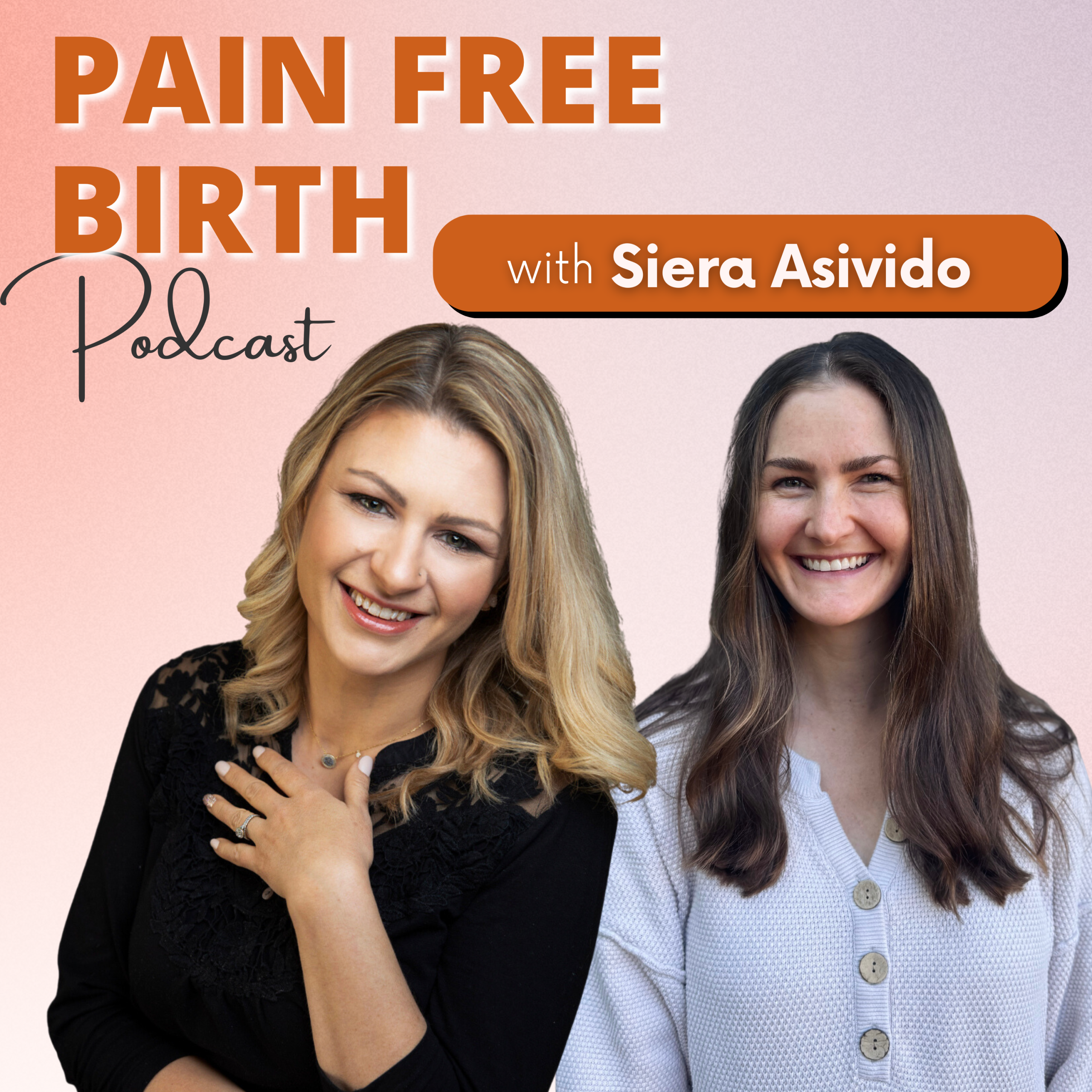
More about Siera:
I am a mama to four children, four years old and younger. My first two babies were both born at home with my lovely midwife, Angela (pictured with us at the twins birth). I planned to do another homebirth with my midwife again, but when we found out we were having twins at our 20 week ultrasound, we made the decision to switch to a hospital birth. Looking back I can see how God used this experience to stretch me and deepen my dependence on Him. I was very anxious and even dreaded giving birth in the hospital environment, but God graciously showed up for me in my time of need and I was able to have a peace-filled, physiological twin birth.
Want to Experience a Faith-Filled Birth Too?
If you’re ready to transform your mindset and birth with peace and purpose, check out the free Unlocking a Pain Free Birth Masterclass. Discover the 3 keys to a Pain-Free birth so you can experience the joyful, supernatural power of birth the way God designed it.
Join Karen’s Doula Certification Program HERE