For many women, a difficult first birth can change the way they approach every pregnancy that follows. When a birth that was carefully prepared for ends in an unexpected C-section, it can leave behind disappointment, unanswered questions, and fears about whether a different experience is possible in the future. Stephanie Andrade’s story is a beautiful reminder that one birth experience does not have to determine the next.
In this episode of the Pain Free Birth Podcast, Stephanie shares the dramatic difference between the births of her two sons. Her first labor began with plans for a peaceful birth center birth but eventually resulted in a hospital transfer, intense interventions, and an emergency Cesarean section. Her second birth unfolded in a completely unexpected way. After preparing for a hospital VBAC, Stephanie experienced a fast, pain-free labor and gave birth in a bathtub with only her husband physically present while her midwife supported them over the phone.
Stephanie’s journey from C-section to pain-free VBAC is about more than two very different birth outcomes. It is a story of processing disappointment, confronting fear, learning to advocate for herself, understanding birth physiology, and ultimately surrendering the outcome to God.
Preparing for a Natural First Birth
When Stephanie became pregnant with her first baby in 2023, she already had a desire for a natural birth. She discovered the Pain Free Birth course through social media and immediately connected with the message. She appreciated learning the practical mechanics of birth and understanding what was physically happening inside a woman’s body during labor.
The course also helped Stephanie connect the physical process of birth with her faith. She entered pregnancy with the belief that her body was designed for birth and that understanding that design could help her approach labor with greater confidence instead of fear. She prepared intentionally and went into her first birth with a positive outlook.
Living in New Zealand at the time, Stephanie had access to midwifery care and planned to give birth at a newly renovated birth center. The environment felt almost like a luxury hotel, offering the comfortable, peaceful setting she wanted for her first birth. Everything seemed to be in place for the natural birth experience she had envisioned.
When labor began at home, Stephanie felt relaxed and believed things were progressing well. Her contractions gradually became stronger, and around three in the morning, she and her husband decided it was time to drive to the birth center.
When Labor Did Not Progress According to the Expected Timeline
Stephanie continued laboring at the birth center for several hours. She was around six or seven centimeters dilated, but after approximately four or five hours, there had not been enough cervical change for her midwife to feel comfortable continuing at the birth center.
The decision was eventually made to transfer Stephanie to the hospital. Once she arrived, the entire feeling of labor began to change. She was given synthetic oxytocin to increase the strength and frequency of her contractions, and what had previously felt manageable quickly became overwhelming.
The contractions came extremely close together and felt much more intense. Stephanie became physically exhausted, but she also noticed an important emotional shift. She was becoming afraid. As fear increased, so did tension, and the contractions that she had previously been able to work through began to feel painful and uncontrollable.
Her baby eventually began showing signs that concerned the medical team. Additional monitoring was used, including an internal monitor, and Stephanie continued laboring in the hospital for hours. Eventually, a doctor came into the room and told her it was time for a C-section because of the concerns about her baby.
Finding Unexpected Peace During an Emergency C-Section
Before labor, a Cesarean section had been one of the outcomes Stephanie most wanted to avoid. After everything she had learned and the natural birth she had envisioned, surgery felt completely outside of the story she had hoped to experience.
Yet when the moment actually arrived, Stephanie was surprised by her own response. Instead of being overwhelmed by fear, she felt peace. She was exhausted, and knowing that the labor was going to end brought a sense of relief she had not expected.
As she was being prepared for surgery, something else surprising happened. Stephanie suddenly began feeling the urge to push. She tried to communicate what she was experiencing, but the team was already preparing to take her into the operating room.
Even in the operating room, Stephanie experienced a reminder of God’s presence. One of the nurses assisting with the surgery was someone she knew from church. The familiar nurse held Stephanie’s hands, and her presence became a deeply meaningful part of an experience that otherwise felt very different from the birth Stephanie had planned.
The C-section itself was positive from Stephanie’s perspective, but afterward she learned something that would become significant during her next pregnancy. The surgeon had checked her cervix while she was under anesthesia and discovered that Stephanie had reached 10 centimeters.
Her body had progressed to complete dilation.
Realizing Her Body Had Known What to Do
Learning that she had reached 10 centimeters changed part of the way Stephanie understood her first labor. Her birth had ended in surgery, but that did not mean her body had failed to progress or was incapable of giving birth vaginally.
That information later became something she could point to while advocating for a VBAC. Stephanie knew her body had reached complete dilation before her C-section. She could enter another pregnancy knowing that her body had already demonstrated its ability to move through the stages of labor.
At the same time, knowing this did not erase the emotional impact of her first experience. Stephanie initially needed several days before she even recognized how heartbroken she felt about the birth.
Some aspects of the experience stayed with her for months. The cervical examinations and internal monitoring were particularly difficult for her to process. Although she knew other women had experienced births that might sound more traumatic from the outside, Stephanie began to recognize that comparison did not change the way certain moments had affected her personally.
This realization became especially important as she considered having another baby.
Facing the Fear of Birth After a C-Section
Stephanie and her husband hoped to have a large family, which added another layer to the emotions surrounding her Cesarean. She did not want fear from her first birth to determine the future of their family, but she also had genuine concerns about what another pregnancy and delivery might look like.
By the time Stephanie became pregnant with her second baby, her family had moved from Auckland to a small town in the South Island of New Zealand. Their new location created additional considerations because the nearest hospital was approximately two and a half hours away.
Stephanie and her midwife discussed the possibility of using the local birth center, but they also had to consider what would happen if an emergency arose. Because of the distance, an emergency hospital transfer could involve Stephanie being airlifted while her husband drove more than two hours to meet her.
After considering the circumstances and discussing VBAC with her midwife, Stephanie and her husband decided to plan for a hospital birth. The decision gave them access to hospital care while still allowing Stephanie to prepare intentionally for the vaginal birth she hoped to experience.
Surrendering the “What Ifs” to God
Preparing for a VBAC required more than making decisions about birth location. Stephanie also had to confront the fears that surfaced as she approached labor again.
One night toward the end of pregnancy, she found herself lying awake thinking through everything that could go wrong. She wondered whether she had allowed herself enough time to heal after her Cesarean. She worried about whether her scar had healed properly and whether she might have pushed herself too much during recovery. One question led to another until she found herself caught in a cycle of “what ifs.”
Eventually, Stephanie recognized that worrying could not guarantee a good outcome. She could continue rehearsing every possible scenario, or she could consciously surrender the things she could not control.
She prayed about the desires she carried for her birth and for the future of her family. She knew God understood how much she wanted a vaginal birth and how much she and her husband desired a large family. Instead of demanding a particular outcome, Stephanie chose to trust Him with those desires.
This surrender did not mean she stopped preparing. Instead, it changed the position from which she prepared. She could educate herself, make thoughtful decisions, and pursue the birth she wanted without believing that she had to control every detail of the outcome.
Learning to Advocate for Her VBAC
One of the biggest changes Stephanie made during her second pregnancy was becoming much more intentional about communicating with her care team. Her first birth had taught her how easy it could be to enter labor with preferences that had never been clearly discussed.
This time, Stephanie came to her midwife with questions and clear preferences. One of the things she strongly desired was to avoid routine cervical examinations. Because of how those examinations had affected her during her first labor, she wanted her progress to be observed through other signs whenever possible.
Her midwife was supportive and agreed that, unless a situation arose where an examination became necessary, they could allow labor to progress without routine cervical checks.
Stephanie also had an online meeting with an obstetrician who explained the hospital protocols typically recommended for VBAC. These included things such as continuous monitoring, cervical examinations, certain expectations around labor progression, and placement of an IV upon arriving at the hospital.
Rather than automatically accepting or rejecting those recommendations, Stephanie researched them. She wanted to understand what was being offered and why so that she could make informed decisions before she was in active labor.
Why Birth Preferences Need to Be Discussed Before Labor
Stephanie’s first experience had shown her how difficult it can be to evaluate options once labor becomes intense. During birth, a woman may be deeply focused inward, physically exhausted, and processing unfamiliar sensations. That is not always the easiest moment to begin researching a recommendation or deciding how strongly you feel about a particular intervention.
For Stephanie, preparation meant deciding beforehand what she was comfortable with and making sure her midwife understood her perspective. She did not want to assume that everyone automatically shared her preferences simply because they were supporting her VBAC.
This became one of the biggest lessons she wanted other mothers to hear. Do not make assumptions about your birth team. Ask questions, communicate clearly, and learn enough about your options to understand why you are making the decisions you are making.
Care providers may be following the standard protocols of their workplace, while a mother may have different preferences based on her own research, values, and previous experiences. Clear communication can help everyone understand those differences before labor begins.
Stephanie entered the final weeks of pregnancy believing she was prepared to advocate for herself during her hospital VBAC. What she did not know was that she would never make it to the hospital.
Waiting for Labor at 41 Weeks
On her due date, Stephanie thought labor might be beginning. Because the hospital was two and a half hours away, she and her husband decided to make the drive rather than risk needing to travel during advanced labor.
Close friends lived only five minutes from the hospital and had offered to let Stephanie’s family stay with them. They could care for Stephanie’s older child while she and her husband went to the hospital when labor became established.
It seemed like the perfect arrangement.
Then, as soon as they arrived, Stephanie’s contractions began fading away. Eventually, they stopped altogether. Instead of driving back home, the family stayed with their friends and waited.
One day turned into several, and eventually Stephanie and her family had been there for an entire week. Rather than becoming consumed with frustration, Stephanie decided to treat the unexpected waiting period almost like a vacation. Her husband was off work, they were together as a family, and they were conveniently located near the hospital whenever their baby finally decided to arrive.
At 41 weeks, that moment came.
Pain-Free Labor Begins in the Middle of the Night
Stephanie went to bed and woke around 10 p.m. feeling contractions. She was excited, but they were manageable enough that she eventually went back to sleep.
Around midnight, she woke again. The contractions were stronger, and her husband could hear her breathing through them. He asked whether they needed to do something, but Stephanie believed there was plenty of time.
She encouraged him to continue sleeping because she assumed they might have a long labor ahead of them. Stephanie got up, moved around the house, watched television, and even did her hair.
The contractions were close together and becoming stronger, but they did not feel painful. That became the very reason Stephanie underestimated how quickly her labor was progressing.
She assumed that if she were truly far along, labor would hurt more.
Stephanie called her midwife and explained what was happening. She had also begun experiencing nausea and vomiting, which she recognized from her first labor as a sign that things were progressing. Still, her water had not broken, and she remained able to talk through the contractions.
Eventually, Stephanie decided to take a shower to relax.
The Moment Everything Changed
Once Stephanie stepped into the shower, labor shifted with incredible speed. She described it as going from about 50 to 100 almost immediately.
Suddenly, she felt an instinctive need to get onto her knees and begin filling the bathtub. There was barely any water in it when the sensations intensified and she realized what was happening.
Her baby was coming.
Stephanie was so internally focused that she did not call out to her husband. Her body and mind had turned inward, and she was responding instinctively to what was happening. Fortunately, her husband heard the change in the sounds she was making and came into the bathroom.
He asked whether they needed to leave for the hospital.
Stephanie knew there was no longer time.
The baby was coming now.
Her husband immediately called their midwife. Because she was experienced with home birth, she remained calm and began guiding them over the phone. She told him to get a towel ready and reassured him that Stephanie could do this.
Their carefully planned hospital VBAC had suddenly become an unplanned, unassisted home birth.
Her Body Pushed the Baby Out Without Conscious Effort
Stephanie remained on her hands and knees in the bathtub as her baby descended. Then something happened that surprised her.
She never consciously pushed.
Stephanie could feel her baby’s head. Another contraction came, and her body simply pushed him out. There was no coached pushing and no intentional effort to force the baby downward. Her body took over, and her son was born.
Her husband caught the baby and brought him up to Stephanie’s chest. The umbilical cord was around his neck, which startled them because they had not prepared to handle that situation alone. Their midwife calmly reassured Stephanie’s husband over the phone and instructed him to unwrap the cord.
After a few moments, their baby cried.
Stephanie and her husband had also chosen not to learn their baby’s sex during pregnancy. In the middle of the shock and joy of what had just happened, they discovered they had another little boy.
The entire experience felt almost impossible to comprehend. Stephanie had gone from believing she was in the earlier stages of labor to holding her baby in the bathtub.
A Pain-Free VBAC With No Ring of Fire
As Stephanie reflected on the sensations of birth, one of the most remarkable parts of her experience was the absence of the pain she had expected.
She felt tremendous pressure as her baby was coming out, particularly because everything happened so quickly. But she did not describe that intensity as pain in the way she would describe an injury. It felt purposeful. Her body was working hard, stretching, opening, and bringing her baby into the world.
Stephanie had also expected to experience the burning sensation often described as the ring of fire.
It never came.
Instead, the knowledge she had gained through birth education returned to her in the exact moment she needed it. She remembered what her body was doing. She understood that her tissues were stretching and opening and that her baby was moving down.
Rather than interpreting those sensations as evidence that something was wrong, she could recognize them as part of the process of birth.
She breathed through the intensity and reminded herself that her body was designed to do what it was doing.
How Understanding Birth Physiology Changed the Experience
Stephanie credits much of that perspective to what she had learned through the Pain Free Birth course and the physiological birth education she continued consuming afterward. She had repeatedly exposed herself to examples of natural birth and had learned to view the sensations of labor through the lens of what the body was accomplishing.
That education mattered when there was suddenly no professional physically present to explain what was happening.
Stephanie knew what her body was doing because she had learned about birth before she entered the bathtub that night. When her body began pushing on its own, she did not have to understand every detail of the mechanism in order to trust the process.
She still experienced moments of uncertainty. The pressure was intense, the birth was happening unexpectedly, and she had never planned to give birth without her midwife physically present. Yet instead of allowing that uncertainty to become panic, Stephanie returned to what she knew.
Her body was opening. Her baby was coming. She could breathe and allow the process to unfold.
A Three-Hour Birth After a Cesarean
From beginning to end, Stephanie estimates that her actual labor lasted no more than about three hours. The contrast between her two birth experiences was extraordinary.
Her first labor had involved hours of hospital care, increasing interventions, fear, exhaustion, and ultimately surgery. Her second labor unfolded quickly and instinctively, with no conscious pushing and very little pain.
The immediate emotional experience was also completely different. At first, Stephanie was simply shocked. Her husband took photographs shortly after the birth, and she remembers that her expression captured the disbelief of what had just happened.
Then came overwhelming joy.
Her baby was there. She had experienced the VBAC she desired. Her body had given birth naturally, and the experience had been more peaceful and pain-free than she had imagined.
Stephanie described it as the kind of birth she might have written down if she had been able to design her perfect birth story.
A Completely Different Postpartum Experience
The contrast continued after birth. Physically, recovering from a vaginal birth was significantly easier for Stephanie than recovering from her Cesarean, but the emotional and spiritual differences stood out just as much.
After her first birth, Stephanie remembers reaching the postpartum hormonal shift a few days later and feeling overwhelmed. She cried frequently and thought, “I can’t do that again.” The transition into motherhood was already new, but she also had the emotional weight of a birth that had unfolded very differently from what she had hoped.
After her second birth, Stephanie found herself saying almost the opposite.
She could do that again.
She felt peaceful, connected, and completely smitten with her baby. Instead of leaving birth afraid of ever repeating the experience, she came away with greater confidence in herself and her body.
For a woman who had once worried that her first C-section could affect the future of the large family she and her husband hoped to have, that change was deeply meaningful.
What Stephanie’s Redemptive VBAC Can Teach Other Mothers
Stephanie’s story is not powerful because every woman should recreate her exact birth. An unassisted home birth was never her plan. She had intentionally prepared for a hospital VBAC and expected her midwife to be physically present when her baby was born.
The deeper lesson is what Stephanie carried into the unexpected.
She had processed her previous birth. She had confronted fear. She had researched her options. She had communicated with her midwife. She understood birth physiology. She had practiced surrendering the things outside of her control to God.
When the carefully constructed plan disappeared and her baby began arriving in a bathtub, that preparation remained.
Birth education could not tell Stephanie exactly how her story would unfold, but it gave her knowledge she could draw from when everything happened differently than expected.
Hope After a Difficult or Traumatic Birth
For the woman who has experienced a traumatic birth, an unwanted Cesarean, or a birth that simply left her feeling disappointed, Stephanie’s story offers hope that the past does not have to become a prediction of the future.
A redemptive birth does not require pretending that the previous experience never happened. Sometimes redemption begins by acknowledging exactly how that experience affected you. It can mean identifying what you want to do differently, finding care providers who are willing to listen, becoming more informed about your choices, and confronting fears that may have remained hidden until another pregnancy brought them back to the surface.
Stephanie encourages mothers not to assume that their care team automatically understands their preferences. Be explicit. Ask questions. Research what is being recommended to you. Understand why you are making the decisions you are making, and seek support from people who respect those decisions.
At the same time, Stephanie’s story demonstrates the freedom that can come from recognizing the limits of control. Preparation matters, but preparation cannot guarantee that birth will follow a particular script.
Preparing Well and Surrendering the Outcome
One of the most beautiful themes in Stephanie Andrade’s birth story is the relationship between preparation and surrender. Those two things do not have to oppose one another.
Stephanie prepared intentionally for her VBAC. She did her research, talked with her providers, established preferences, and thought carefully about the birth environment. She did not approach her second birth passively.
Yet she also reached a point where she knew she could not carry every “what if” herself.
She trusted God with the desires of her heart and with the parts of birth she could not control. In the end, her birth did not follow the plan she had created. It unfolded in a way she never could have predicted, but when the unexpected happened, she was prepared to meet it with knowledge, faith, and trust.
For mothers preparing for birth after Cesarean, birth trauma, or a disappointing previous experience, Stephanie’s journey is a reminder that your first birth does not have to define your relationship with birth forever.
You can learn from the past without allowing it to dictate the future. You can become informed without trying to control every possibility. You can advocate for yourself while remaining flexible when circumstances change. You can acknowledge fear while choosing not to let fear lead you.
And you can prepare wholeheartedly for the birth you desire while surrendering the outcome to God.
Stephanie’s story began with a birth that left her heartbroken. Her next birth reminded her of something she had been learning all along: her body was capable, she could trust the process unfolding within her, and one difficult chapter did not have to be the end of her birth story.
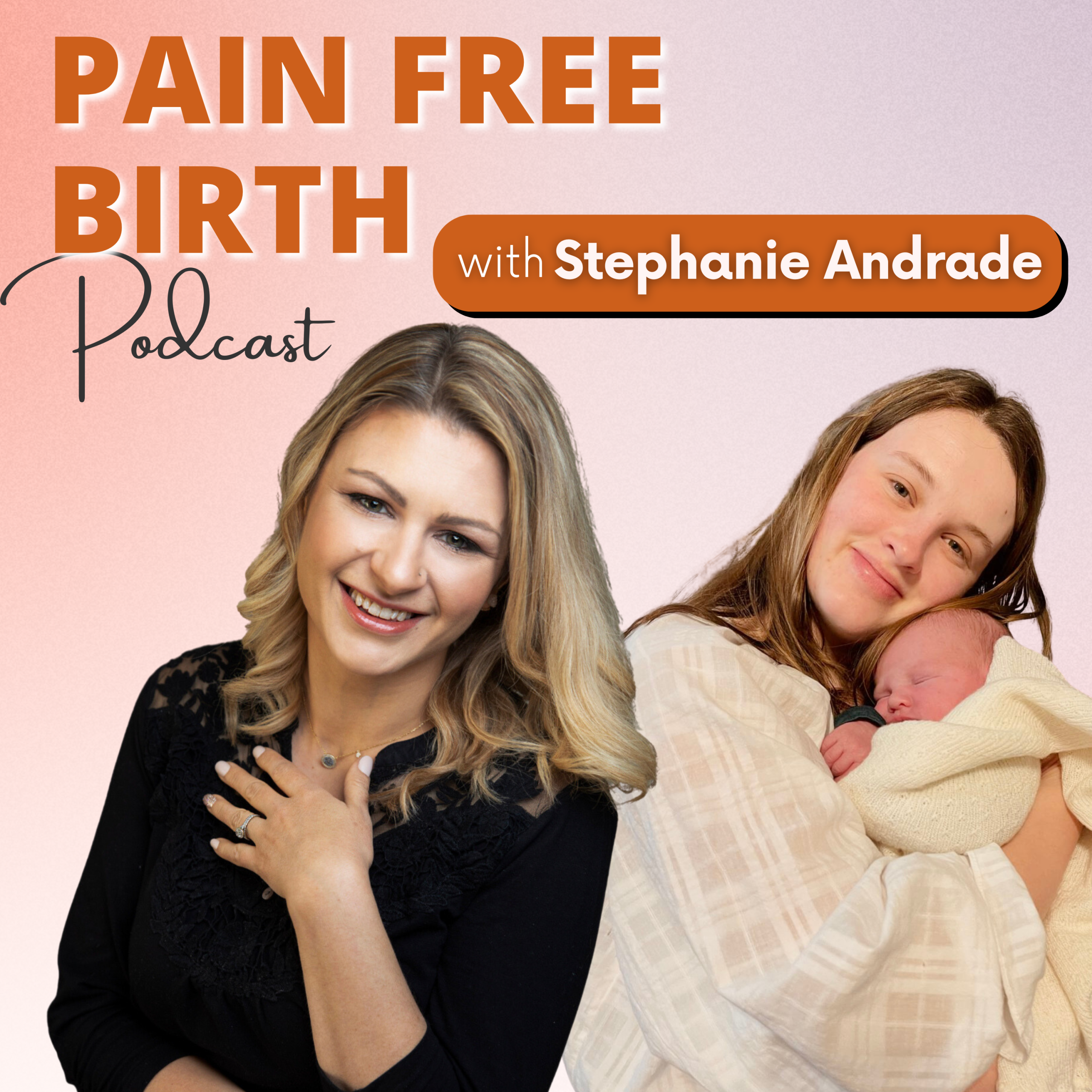
More about Stephanie:
Mum of two and pastors wife living in small town New Zealand – first birth resulted in an emergency C-section after a birthing centre transfer. Second birth was a redemptive VBAC (unplanned) homebirth with just myself and my husband present!
Instagram: @stephreneeandrade
Want to Experience a Faith-Filled Birth Too?
If you’re ready to transform your mindset and birth with peace and purpose, check out the free Unlocking a Pain Free Birth Masterclass. Discover the 3 keys to a Pain-Free birth so you can experience the joyful, supernatural power of birth the way God designed it.
Join Karen’s Doula Certification Program HERE